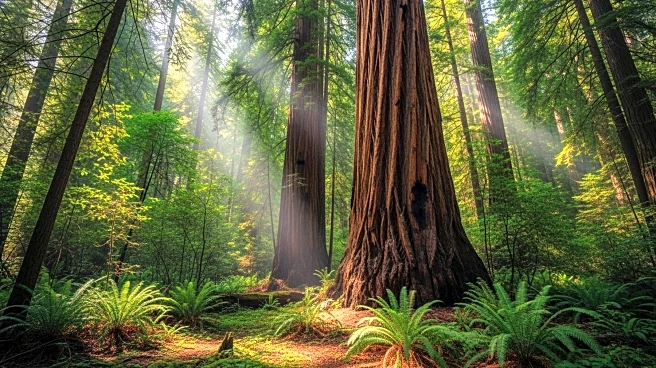




Redwood National and State Parks, located on the northern coast of California, are a testament to the grandeur of nature. These parks are home to some of the tallest and most massive trees on Earth, the coast redwoods. Established in 1968, the parks cover an impressive 139,000 acres and are a UNESCO World Heritage Site. This article delves into the natural beauty and ecological importance of these parks, highlighting their unique features and the efforts
to preserve them.
The Enchanting Redwood Forests
The Redwood National and State Parks are renowned for their old-growth temperate rainforests. These forests are home to 45% of all remaining coast redwood forests, covering at least 38,982 acres. The coast redwoods are not only the tallest trees on Earth but also among the largest, creating a breathtaking canopy that towers over the forest floor. Walking through these ancient forests, visitors are enveloped in a serene atmosphere, with the towering trees providing a natural cathedral-like setting.
In addition to the redwoods, the parks protect a diverse array of plant and animal life. The lush undergrowth is teeming with ferns, mosses, and other plant species that thrive in the moist, foggy climate. This rich biodiversity makes the parks a vital habitat for numerous species, some of which are threatened or endangered.
A Sanctuary for Wildlife
The Redwood National and State Parks are not just about trees; they are also a sanctuary for a variety of wildlife. The parks' ecosystems support several threatened animal species, including the tidewater goby, Chinook salmon, northern spotted owl, and Steller's sea lion. These species rely on the unique habitats provided by the parks, from the cool, shaded forest floors to the pristine coastal waters.
The parks' location along the California coast also makes them an important stopover for migratory birds. Birdwatchers can spot a variety of species, from the majestic bald eagle to the elusive marbled murrelet. The parks' diverse habitats offer a haven for these birds, providing food, shelter, and breeding grounds.
Conservation Efforts and Challenges
The history of the Redwood National and State Parks is one of both exploitation and conservation. In the mid-19th century, the discovery of gold in the region brought an influx of settlers, leading to extensive logging of the redwood forests. By the time conservation efforts began in earnest in the 1920s, nearly 90% of the original redwood trees had been logged.
Organizations like the Save the Redwoods League played a crucial role in preserving the remaining forests. Their efforts led to the establishment of several state parks, and eventually, the creation of the Redwood National Park in 1968. Today, the parks are co-managed by the National Park Service and the California Department of Parks and Recreation, ensuring the protection of these natural treasures for future generations.
Despite these efforts, the parks face ongoing challenges, including climate change and human impact. Conservationists continue to work tirelessly to protect the parks' ecosystems, ensuring that the majestic redwoods and their diverse habitats remain a source of wonder and inspiration for all who visit.