
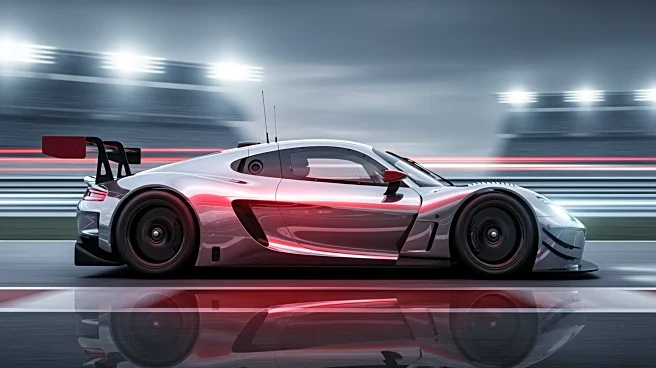
The Le Mans Hypercar (LMH) class represents a significant shift in the world of endurance racing, with regulations evolving to meet the needs of manufacturers and the sport itself. Introduced as a successor to the Le Mans Prototype 1 (LMP1), the LMH regulations were crafted to balance performance with cost-effectiveness, while also encouraging innovation and competition among manufacturers.
The Demise of LMP1
The transition from LMP1 to LMH was driven by several factors,
including the exit of major manufacturers like Audi and Porsche from the FIA World Endurance Championship. These departures were partly due to the Volkswagen emissions scandal and the escalating costs associated with the LMP1 Hybrid sub-category. In response, the Automobile Club de l'Ouest (ACO) initiated discussions to reduce competition costs and develop new regulations for the next generation of endurance racing.
Initially, the new LMP1 rules aimed to introduce a single, low-power hybrid system, with plans for a shared platform with IMSA. This approach was intended to unify top-level sports car racing, allowing teams to compete in major endurance events like the 24 Hours of Daytona, 24 Hours of Le Mans, and 12 Hours of Sebring. The focus was on maintaining performance levels while significantly reducing costs.
Early Concepts and Challenges
In June 2018, the FIA confirmed that the new prototype regulations would be based on hypercar design concepts. This announcement came ahead of the 2018 24 Hours of Le Mans, where initial details of the new top class were revealed. Manufacturers like Toyota, Ford, McLaren, Aston Martin, and Ferrari participated in discussions, with a targeted budget significantly lower than existing manufacturer team budgets.
Despite the promising outlook, concerns arose regarding the tight timelines for manufacturers to design and build new cars. By the end of 2018, only Scuderia Cameron Glickenhaus had committed to the new regulations, while others hesitated due to the fluid state of the rules. McLaren, for instance, opted out of participating in the first year due to these uncertainties.
Finalizing the Regulations
The technical rulebook for the LMH class was published in December 2018, mandating production-based powertrains and requiring manufacturers to produce a minimum number of road cars fitted with race car components. The regulations set a maximum power output and weight for the cars, with diesel power banned and a cost cap on energy recovery systems.
In March 2019, adjustments were made to allow race cars derived from road-going hypercars, aligning production and race activities more closely. This led to changes in target lap times and the removal of movable aerodynamic devices due to cost concerns. By June 2019, Toyota Gazoo Racing and Aston Martin Racing committed to the category, marking the beginning of the LMH class.
The evolution of LMH regulations reflects the dynamic nature of endurance racing, balancing innovation, cost, and competition to ensure the sport's continued growth and appeal.