



Petrified Forest National Park in Arizona is a geological marvel, showcasing a rich tapestry of natural history. Known for its extensive deposits of petrified wood, the park offers a glimpse into the Late Triassic Epoch, a time when the area was a lush, subtropical region. Today, visitors can explore the park's diverse landscapes, from colorful badlands to semi-desert shrub steppe, all shaped by millions of years of geological processes.
The Chinle Formation
The Chinle
Formation is a key geological feature of Petrified Forest National Park. This formation, which dates back to the Late Triassic Epoch, is renowned for its vibrant colors and fossil-rich deposits. The Chinle Formation consists of sedimentary rocks, including mudstone, siltstone, and claystone, which have eroded over time to create the park's striking badlands. These badlands are characterized by cliffs, gullies, mesas, and buttes, offering a dramatic landscape for visitors to explore.
The formation's colorful appearance is due to the presence of bentonite clay, which swells when wet and shrinks when dry, causing surface movement and cracking. This unique property discourages plant growth, leaving the Chinle Formation exposed to the elements. As a result, the park's badlands are particularly susceptible to weathering, creating a constantly changing landscape.
Fossilized Forests
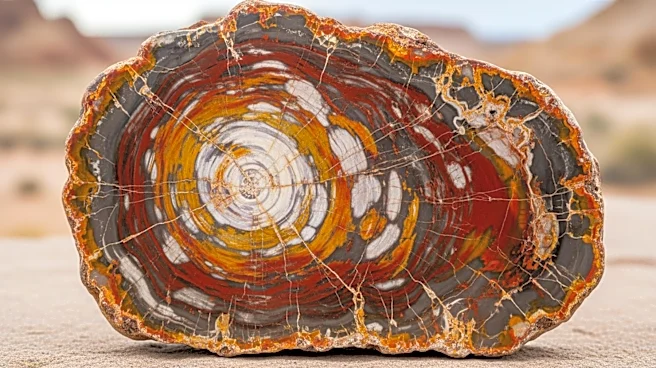
One of the most fascinating aspects of Petrified Forest National Park is its fossilized forests. During the Late Triassic, fallen trees were buried by sediment containing volcanic ash. Groundwater dissolved silica from the ash and carried it into the logs, forming quartz crystals that replaced the organic matter. This process resulted in the petrified wood that the park is famous for today.
The petrified logs in the park have retained their original external form, but their internal structure has been replaced by minerals. Some logs even retain cellular details, allowing scientists to study the original organisms' cellular makeup. The park's petrified wood is primarily from extinct conifer trees, such as Araucarioxylon arizonicum, and is found in various colors due to traces of iron oxide and other substances.
Erosion and the Colorado Plateau
The geological history of Petrified Forest National Park is closely tied to the uplift of the Colorado Plateau. About 60 million years ago, tectonic movements began to raise the plateau, exposing it to increased erosion. This uplift led to the removal of rock layers above the Chinle Formation, except for geologically recent ones found in parts of the park.
The Bidahochi Formation, laid down only 4 to 8 million years ago, rests directly atop the Chinle. During its deposition, a large lake basin covered much of northeastern Arizona, leaving behind fluvial and lacustrine deposits. Volcanic activity during this period also contributed ash and lava to the formation. Today, erosion has exposed volcanic landforms called maars, adding to the park's geological diversity.