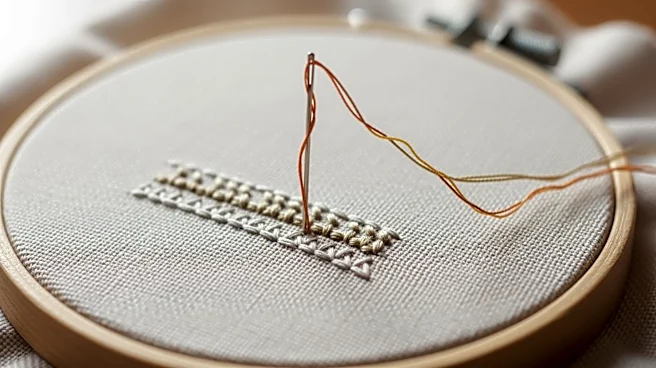





Embroidery is a versatile art form that relies on a variety of stitches to create intricate designs. Each stitch has its unique characteristics and applications, contributing to the overall beauty and complexity of the embroidery. This article explores some of the most common embroidery stitches and their uses.
Running and Back Stitches
Running stitches are among the simplest and most fundamental stitches in embroidery. They involve a straightforward up-and-down motion through
the fabric, creating a dashed line effect. This stitch is often used for outlining designs or adding fine details. Variations like the Holbein stitch, also known as the double running stitch, provide a more solid line by retracing the path in the opposite direction.
Back stitches, on the other hand, create a continuous line by encircling the fabric. The needle comes up from the back, makes a stitch to the right, and then passes behind the first stitch to come up to the left. This stitch is ideal for outlining and adding definition to designs. Variations like the stem stitch and split stitch offer different textures and effects, making them popular choices for floral and decorative patterns.
Chain and Buttonhole Stitches
Chain stitches are characterized by their looped appearance, with each stitch catching a loop of thread on the fabric's surface. The basic chain stitch is versatile and can be used to create outlines, borders, and decorative elements. Variations like the lazy daisy stitch and Spanish chain add further dimension and interest to embroidery projects.
Buttonhole stitches, also known as blanket stitches, are used to create a series of loops along the fabric's edge. This stitch is particularly useful for preventing fraying and is often employed in finishing edges of blankets and buttonholes. Variations like the closed buttonhole stitch and crossed buttonhole stitch offer different visual effects, making them suitable for a range of applications.
Knotted and Couching Stitches
Knotted stitches add texture and dimension to embroidery designs. The French knot, for example, involves wrapping the thread around the needle before pulling it through the fabric, creating a small, raised knot. This stitch is often used to add detail to floral designs and other decorative elements.
Couching stitches involve laying a thread on the fabric's surface and securing it with smaller stitches. This technique is ideal for working with heavier threads or metallics that cannot be easily stitched through the fabric. Variations like Bokhara couching and battlement couching offer different textures and effects, enhancing the overall design.
Embroidery stitches are the building blocks of this intricate art form, each offering unique possibilities for creativity and expression. By mastering these stitches, embroiderers can create stunning works of art that showcase their skill and artistry.