







Apollo 11 stands as one of the most significant achievements in human space exploration. On July 20, 1969, astronauts Neil Armstrong and Buzz Aldrin became the first humans to set foot on the Moon, marking a pivotal moment in the Space Race and fulfilling President Kennedy's ambitious goal set in 1961.
The Mission's Preparation and Launch
The Apollo 11 mission was the culmination of years of research, development, and testing. NASA's Apollo program had already achieved several milestones,
including the first manned orbit of the Moon with Apollo 8. The mission required the Saturn V rocket, a powerful launch vehicle capable of carrying the command module, service module, and lunar module to the Moon.
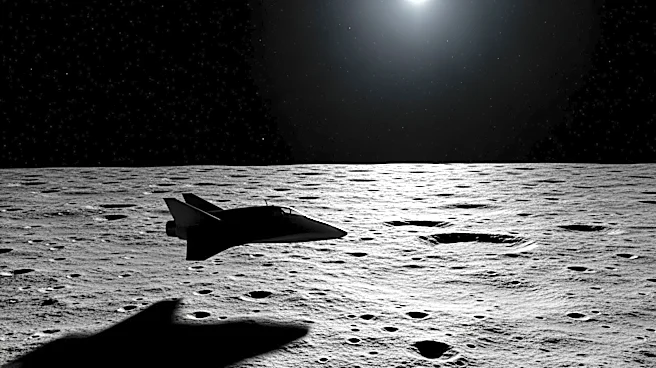
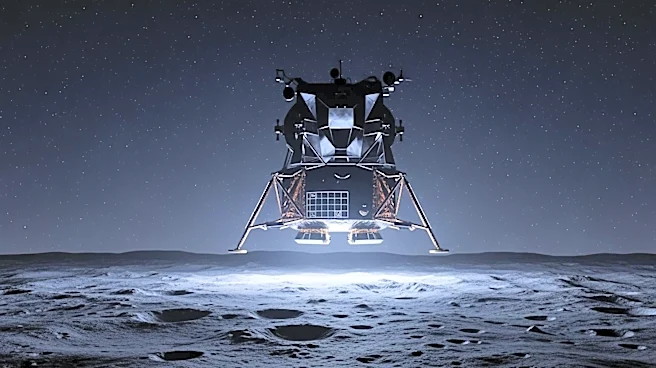
The crew consisted of Commander Neil Armstrong, Lunar Module Pilot Buzz Aldrin, and Command Module Pilot Michael Collins. The mission launched from Kennedy Space Center on July 16, 1969, and after a three-day journey, the spacecraft entered lunar orbit. The lunar module, named Eagle, separated from the command module and began its descent to the Moon's surface.
The Moon Landing and First Steps
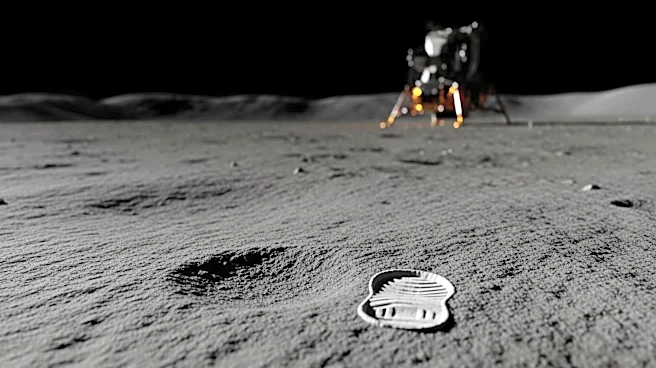
The landing site was the Sea of Tranquility, chosen for its relatively flat terrain. As the Eagle descended, Armstrong took manual control to avoid a boulder-strewn area, landing safely at 20:17 UTC. Six hours later, Armstrong stepped onto the lunar surface, uttering the famous words, "That's one small step for [a] man, one giant leap for mankind."
Aldrin joined Armstrong on the surface, and together they spent over two hours conducting experiments, collecting samples, and taking photographs. The event was broadcast live to millions around the world, making it one of the most-watched television events in history. The astronauts planted the American flag and spoke with President Nixon via a telephone-radio transmission.
The Return and Legacy
After spending 21 hours on the Moon, the astronauts returned to the lunar module and launched back to the command module, piloted by Collins. The crew safely returned to Earth, splashing down in the Pacific Ocean on July 24, 1969. The mission was a resounding success, demonstrating the United States' technological capabilities and marking a victory in the Space Race.
Apollo 11's legacy is profound, inspiring generations to pursue space exploration and scientific discovery. The mission proved that humans could travel to and return from another celestial body, paving the way for future exploration. The samples and data collected continue to provide valuable insights into the Moon's composition and history, underscoring the lasting impact of this historic achievement.