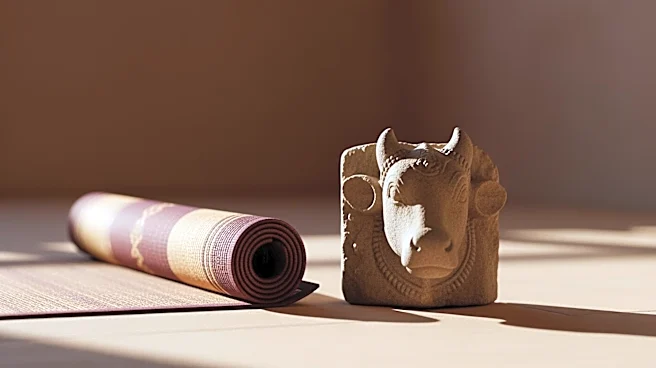





Gomukhasana, known as Cow Face Pose, is a seated yoga posture that has been practiced for centuries. Its name derives from the Sanskrit words 'go' meaning cow and 'mukha' meaning face, reflecting the pose's resemblance to a cow's face. This asana is not only a physical exercise but also a meditative practice, deeply rooted in the history of yoga.
Ancient Texts and Mentions
Gomukhasana is mentioned in several ancient yoga texts, highlighting its longstanding significance in the
practice of yoga. The pose is described in the Haṭhayogapradīpikā, a classical text on Hatha yoga written by Svātmārāma in the 15th century. This text is one of the earliest comprehensive guides to Hatha yoga, detailing various asanas and their benefits.
Additionally, Gomukhasana appears in the Haṭha Ratnāvalī by Srinivasa and the Gheraṇḍa Saṃhitā, both dating back to the 17th century. These texts further emphasize the importance of Gomukhasana in traditional yoga practices, offering insights into its execution and effects. The consistent mention of Gomukhasana across these texts underscores its enduring presence in the yoga tradition.
Description and Execution
The execution of Gomukhasana involves a seated position where the legs are crossed in a specific manner. The right heel is placed along the left side of the body, and vice versa, creating a shape that resembles the horns of a cow. This unique positioning is not only symbolic but also serves to stretch and open the hips, making it a beneficial pose for flexibility.
The detailed descriptions found in the Haṭhayogapradīpikā and the Gheraṇḍa Saṃhitā provide practitioners with guidance on achieving the correct form. These texts emphasize the importance of maintaining balance and focus while in the pose, which can aid in meditation and enhance the overall yoga experience.
Meditation and Benefits
Gomukhasana is often used as a meditative posture, allowing practitioners to find stillness and focus. The pose's design facilitates deep breathing and concentration, making it an ideal position for meditation. The physical benefits of Gomukhasana include improved shoulder flexibility and hip opening, which can contribute to better posture and reduced tension.
The historical texts that describe Gomukhasana also highlight its therapeutic effects, suggesting that regular practice can lead to increased physical and mental well-being. By integrating Gomukhasana into a yoga routine, practitioners can experience both the meditative and physical benefits that have been recognized for centuries.