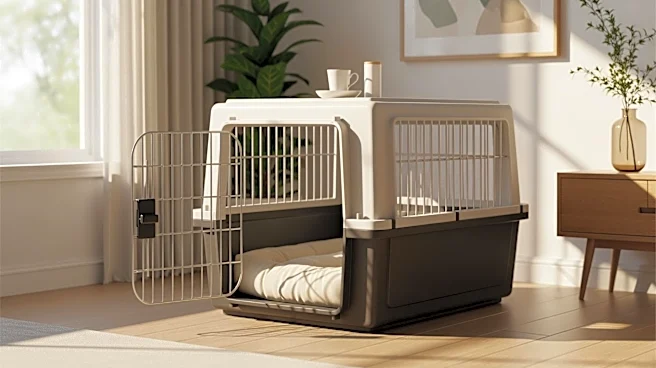








Dog crates are a common tool used by pet owners to train and ensure the safety of their dogs. These enclosures, which can be made from various materials such as metal, wire, plastic, or fabric, serve multiple purposes. They replicate a dog's natural den, providing a sense of security and a place of refuge. This article explores the role of dog crates in training and safety, highlighting their benefits and considerations for use.
Crate Training for Behavior Management
Crate training is a method
used to accustom dogs to their crates, allowing them to rest without stress. This process is akin to using a playpen for a toddler or a crib for a baby, providing a safe space where the pet can be left unsupervised. Proper crate training can help manage a dog's behavior by limiting their access to certain areas while they learn household rules. It is particularly useful for toilet training puppies, as dogs naturally avoid soiling their sleeping area.
However, it is crucial to use crates appropriately. Misuse, such as prolonged confinement, can lead to psychological harm. Therefore, crate training should be approached with care, ensuring that the dog associates the crate with positive experiences. This can be achieved by making the crate comfortable with proper bedding and introducing the dog to the crate gradually.
Ensuring Safety During Travel
Dog crates are also essential for ensuring safety during travel. Solid plastic crates are often preferred for secure travel, especially in airplanes, as they provide more protection in case of accidents. These crates are designed to withstand the rigors of travel, offering a safe and enclosed space for the dog.
For car travel, wire crates are commonly used due to their ability to provide airflow and visibility. They are also popular at dog shows, where they allow spectators to see the dogs clearly. Regardless of the type, using a crate during travel helps prevent the dog from moving around the vehicle, reducing the risk of injury.
Choosing the Right Crate
Selecting the appropriate crate involves considering factors such as cost, durability, portability, safety, and style. Hybrid crates, which combine aluminum, coated steel wire mesh, and reinforced plastic, offer durability and airflow. Soft-sided crates, made of fabric on a metal frame, are lightweight and easy to transport, but they are not suitable for dogs prone to chewing or digging.
Ultimately, the choice of crate should align with the dog's needs and the owner's lifestyle. By understanding the role of dog crates in training and safety, pet owners can make informed decisions that benefit both their pets and themselves.