





The USS United States was a pivotal ship in the early history of the U.S. Navy, being the first of the original six frigates authorized by the Naval Act of 1794. Designed by Joshua Humphreys, this ship was intended to be a capital ship for the young Navy, larger and more heavily armed than typical frigates of the period. The construction of the USS United States marked a significant step in establishing a formidable naval presence for the United States.
The Naval Act of 1794 and Initial Design
The Naval Act of 1794 was a response to the threat posed by Barbary pirates in the Mediterranean, which had been preying on American merchant vessels. This act authorized the construction of six frigates, with a clause that construction would cease if peace was reached with Algiers. Joshua Humphreys, the designer, envisioned these frigates as powerful ships capable of overpowering other frigates while being fast enough to escape ships of the line. His design was deep, long on keel, and narrow of beam, allowing for the mounting of very heavy guns.
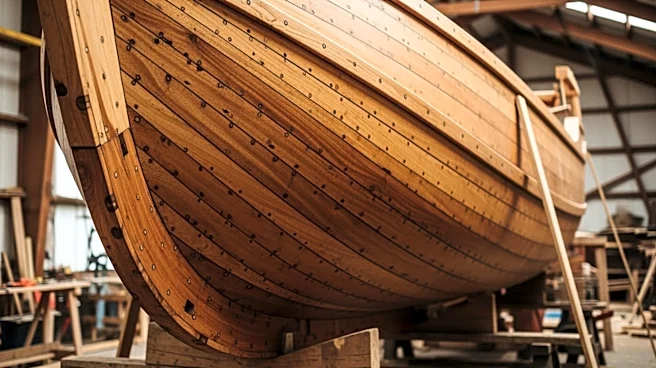
Humphreys' design incorporated a diagonal scantling scheme to limit hogging and used extremely heavy planking, giving the hull greater strength than those of more lightly built frigates. This innovative design was crucial because the United States could not match the size of European navies, so it needed ships that could dominate in combat while maintaining speed and maneuverability.
Construction Challenges and Launch
The keel of the USS United States was laid down in 1795 at Humphreys' shipyard in Philadelphia, Pennsylvania. The construction faced several challenges, including the open nature of the shipyard, which led to concerns about sabotage. Despite these challenges, the ship was launched on May 10, 1797, becoming the first American warship launched under the Naval Act of 1794.
The construction process was closely monitored, with President George Washington and First Lady Martha Washington visiting the shipyard. The President expressed admiration for the ship's size, highlighting the significance of this project in the nation's naval ambitions. The USS United States was fitted out in Philadelphia during the spring of 1798 and was ordered to proceed to sea on July 3, 1798.
Armament and Early Service
The USS United States was nominally rated as a 44-gun ship but often carried over 50 guns. Its initial armament included thirty-two 24-pounder cannons, twenty-two 42-pounder carronades, and one 18-pounder long gun. The ship's armament was not fixed, as guns were portable and often exchanged between ships as needed.
Under the command of Captain John Barry, the USS United States began its service by protecting American merchant shipping during the Quasi-War with France. This early service demonstrated the ship's capabilities and set the stage for its role in establishing the United States as a naval power.