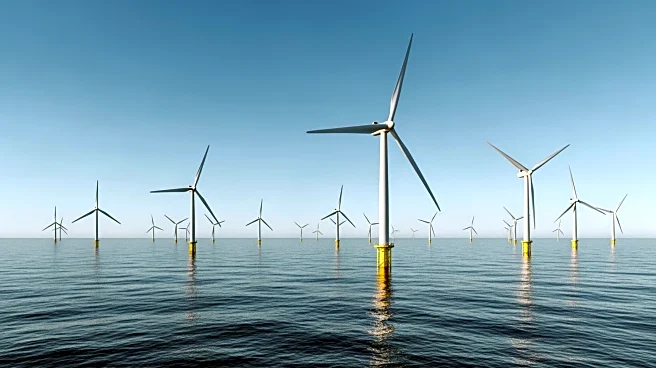




Offshore wind power holds significant potential for expanding the United States' renewable energy capacity. This article explores the potential and challenges of offshore wind power development in the U.S., highlighting key projects and future prospects.
Early Developments and Current Projects
The first operational offshore wind farm in the United States, Block Island Wind Farm, opened in 2016 off the coast of Rhode Island. This marked the beginning of offshore wind development in the country,
with several projects now underway along the East Coast, in the Great Lakes, and on the Pacific Coast.
As of 2025, the total installed offshore wind capacity in the U.S. was 174 MW, with projects like Vineyard Wind 1, Coastal Virginia Offshore Wind, and Revolution Wind under construction. These projects are part of a broader effort to harness the significant wind potential available offshore, with estimates suggesting a technical resource potential of 1,476 GW for fixed-bottom and 2,773 GW for floating offshore wind power.
Challenges and Regulatory Framework
Despite its potential, offshore wind development in the United States faces several challenges. The permitting process involves multiple federal agencies, including the Bureau of Ocean Energy Management (BOEM) and the Federal Energy Regulatory Commission (FERC), which oversee leasing, permitting, and grid interconnection.
Environmental concerns, such as impacts on marine ecosystems and wildlife, also pose challenges. Developers must navigate complex regulatory requirements and implement measures to mitigate potential environmental impacts. Additionally, the high upfront costs of offshore wind projects require significant investment and financial incentives to be viable.
Future Prospects and Federal Support
The Biden administration has set an ambitious target of installing 30 GW of offshore wind power by 2030. This goal is part of broader efforts to combat climate change and promote clean energy. Federal support, including tax incentives and regulatory frameworks, will play a crucial role in achieving this target.
As offshore wind projects continue to develop, the potential for job creation and economic growth is significant. The expansion of offshore wind energy presents opportunities for coastal regions, with investments in port infrastructure and supply chains expected to drive economic development.
Overall, while challenges remain, the potential of offshore wind power in the United States is vast. With continued federal support and investment, offshore wind can become a key component of the country's renewable energy strategy, contributing to a more sustainable and resilient energy future.