

Mount Rushmore is one of the most iconic landmarks in the United States, featuring the faces of four U.S. presidents carved into the granite face of a mountain in South Dakota. The creation of this monumental sculpture was a massive undertaking that spanned 14 years, from 1927 to 1941. This article delves into the construction process, the challenges faced, and the vision behind this grand project.
The Vision and Planning
The idea for Mount Rushmore originated with Doane
Robinson, a South Dakota historian who sought to promote tourism in the region. He envisioned a grand sculpture that would draw visitors from across the country. Robinson initially proposed carving the likenesses of famous figures from the American West, but sculptor Gutzon Borglum had a different vision. Borglum believed the monument should have national significance and proposed the faces of four U.S. presidents: George Washington, Thomas Jefferson, Theodore Roosevelt, and Abraham Lincoln.
Borglum's vision was ambitious. He planned for the sculptures to extend from the heads down to the waists of the presidents. However, the project faced numerous challenges, including funding issues and the hard granite of the mountain, which made carving difficult. Despite these obstacles, Borglum's determination and the support of local and federal officials helped bring the project to life.
The Construction Process
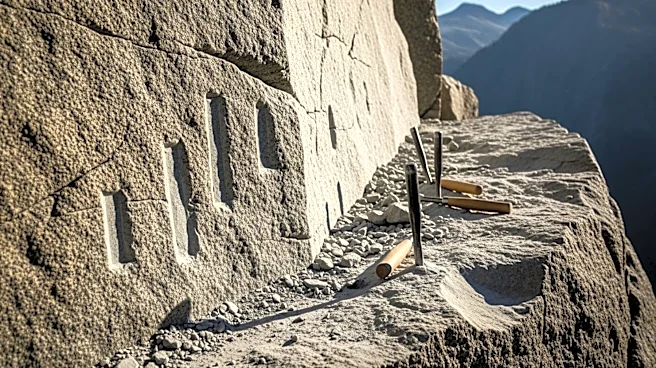
Construction of Mount Rushmore began on October 4, 1927. The process was labor-intensive and required the skills of over 400 workers, including miners, sculptors, and rock climbers. The team used dynamite to remove large sections of rock, followed by more precise work with jackhammers and chisels to shape the faces. The project was not without its challenges. The granite proved to be harder than anticipated, and the team had to adjust their plans several times.
One of the most significant challenges was the relocation of Thomas Jefferson's face. Initially, Jefferson was to be carved to the right of Washington, but the rock in that area was unsuitable. The team had to dynamite the partially completed face and start anew on the left side of Washington. Despite these setbacks, the faces of Washington, Jefferson, Lincoln, and Roosevelt were completed between 1934 and 1939.
Completion and Legacy
The project faced a major setback in 1941 when Gutzon Borglum passed away. His son, Lincoln Borglum, took over the project, but funding issues and the onset of World War II led to the decision to halt construction. The monument was declared complete on October 31, 1941, with only the heads of the presidents finished.
Today, Mount Rushmore stands as a testament to American history and the vision of those who created it. It attracts over two million visitors annually, serving as a symbol of national pride and a reminder of the country's rich history. The challenges faced during its construction only add to the monument's legacy, highlighting the determination and ingenuity required to bring such a grand vision to life.