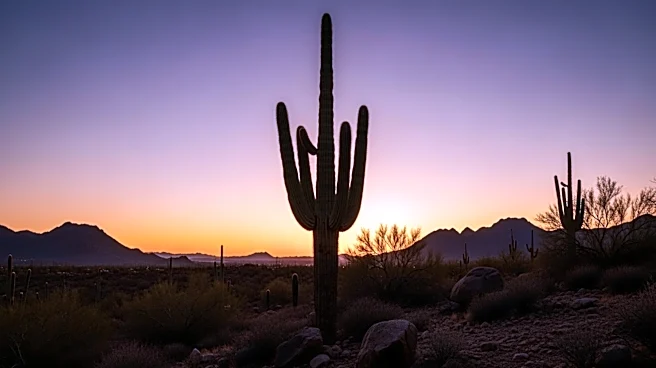

Saguaro National Park, located in southeastern Arizona, is a testament to the rich history and natural beauty of the Sonoran Desert. Established as a national park in 1994, its history dates back to the early
20th century when efforts to protect the iconic saguaro cactus began. The park's development reflects a broader narrative of conservation and appreciation for the unique landscapes of the American Southwest.
Early History and Establishment
The history of Saguaro National Park begins with the early inhabitants of the region, including the Hohokam, Sobaipuri, and Tohono O'odham peoples. These indigenous groups lived in harmony with the desert environment, utilizing its resources for sustenance and shelter. Spanish explorers and missionaries arrived in the 16th century, followed by miners and ranchers in the 19th century, who sought to exploit the area's natural resources.
The idea of preserving the saguaro cactus gained traction in the early 20th century. In 1920, members of the Natural History Society of the University of Arizona expressed interest in creating a protected area for the cactus. By 1933, President Herbert Hoover used the Antiquities Act to establish the Saguaro National Monument, marking the first step towards the park's eventual designation.
Expansion and Development
The park's development continued under the leadership of President Franklin D. Roosevelt, who transferred management of the monument to the National Park Service. During the 1930s, the Civilian Conservation Corps (CCC) played a crucial role in building infrastructure, including the Cactus Forest Loop Drive in the Rincon Mountain District.
In 1961, President John F. Kennedy expanded the monument by adding the Tucson Mountain District, which was carved from Tucson Mountain Park. This expansion was part of a broader effort to protect the unique desert landscapes and the diverse ecosystems they support. The park's boundaries were further expanded in 1976 and 1994, culminating in its designation as a national park.
Modern Conservation Efforts
Today, Saguaro National Park is managed by the National Park Service, which oversees conservation efforts to protect its unique ecosystems. The park faces challenges from invasive species, climate change, and urban development, which threaten its biodiversity and natural beauty.
Efforts to preserve the park's resources include managing invasive species like buffelgrass, which poses a significant fire hazard. The park also participates in the Sonoran Desert Inventory and Monitoring Network, which supports scientific research and conservation initiatives across the region.
Saguaro National Park's history is a testament to the enduring value of conservation and the importance of preserving natural landscapes for future generations. As visitors explore the park, they are reminded of the rich cultural and natural heritage that defines this unique corner of the American Southwest.