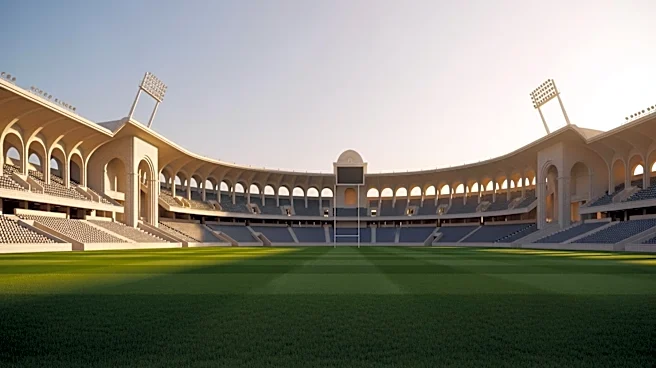









The Olympiastadion in Berlin is more than just a sports venue; it is a symbol of historical and cultural significance. Originally built for the 1936 Summer Olympics, the stadium has witnessed numerous pivotal events in sports history. Over the years, it has evolved into a multi-purpose arena, hosting a variety of international competitions and cultural events. This article delves into the rich history and cultural impact of the Olympiastadion, highlighting
its role as a landmark in Berlin.
A Monument of the 1936 Olympics
The Olympiastadion was constructed for the 1936 Summer Olympics, a time when the world was on the brink of significant political changes. Designed by Werner March, the stadium was part of a larger sports complex commissioned by the Nazi government. The construction of the stadium was a massive undertaking, with the aim of showcasing Germany's prowess on the global stage. The stadium's architecture, with its imposing structure and capacity to hold over 100,000 spectators, was a testament to the ambitions of the era.
During the 1936 Olympics, the Olympiastadion became a focal point for international attention. The games were used as a propaganda tool by the Nazi regime, but they also provided a platform for athletes like Jesse Owens, whose remarkable achievements challenged the racial ideologies of the time. The stadium's historical significance is further underscored by its survival through World War II, emerging largely unscathed despite the conflict.
Evolution into a Modern Arena
In the decades following the war, the Olympiastadion underwent several transformations. The most significant renovation occurred in 2004, in preparation for the 2006 FIFA World Cup. This renovation modernized the stadium, enhancing its facilities while preserving its historical architecture. The updated stadium now boasts a permanent capacity of 74,475 seats, making it the largest in Germany for international football matches.
The Olympiastadion's role as a venue for major sporting events continued with the 2006 FIFA World Cup, where it hosted six matches, including the final. The stadium has also been a regular host for the DFB-Pokal finals since 1985 and has welcomed other prestigious events like the 2011 FIFA Women's World Cup and the 2015 UEFA Champions League final.
Cultural and Social Impact
Beyond sports, the Olympiastadion has played a significant role in Berlin's cultural landscape. It has hosted concerts, festivals, and other large-scale events, drawing visitors from around the world. The stadium's ability to adapt to various events has made it a versatile venue, contributing to Berlin's reputation as a vibrant cultural hub.
The Olympiastadion's enduring presence in Berlin is a testament to its historical and cultural importance. As a site of both triumph and controversy, it continues to be a place where history is made, reflecting the dynamic spirit of the city and its people.