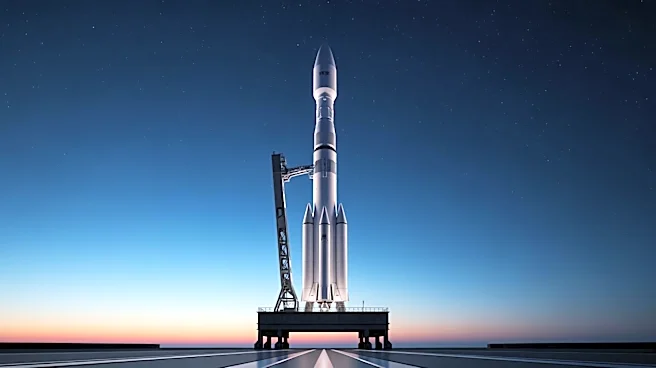







The Saturn V rocket, developed by NASA for the Apollo program, left an indelible mark on the history of space exploration. As the most powerful rocket ever built, the Saturn V played a pivotal role in launching humans to the Moon and advancing our understanding of space travel. This article explores the impact and legacy of the Saturn V rocket, highlighting its contributions to space exploration and technology.
Pioneering Human Spaceflight
The Saturn V rocket was instrumental
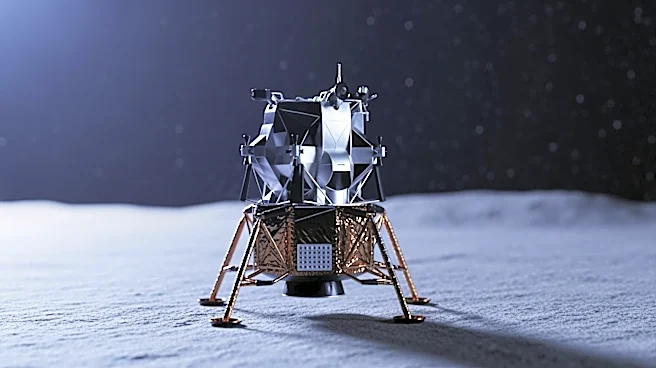
in achieving one of humanity's greatest milestones: landing humans on the Moon. Between 1967 and 1973, the Saturn V was used for nine crewed flights to the Moon, including the historic Apollo 11 mission, which saw astronauts Neil Armstrong and Buzz Aldrin become the first humans to set foot on the lunar surface. The rocket's immense power and reliability made these missions possible, allowing astronauts to explore the Moon and conduct scientific experiments.
The success of the Saturn V and the Apollo program demonstrated the feasibility of human spaceflight beyond low Earth orbit, paving the way for future exploration missions. The rocket's ability to carry large payloads and support extended missions provided valuable insights into the challenges and possibilities of space travel, inspiring generations of scientists, engineers, and explorers.
Technological Advancements
The development of the Saturn V rocket led to numerous technological advancements that have had a lasting impact on space exploration and related fields. The rocket's powerful engines, innovative structural design, and advanced guidance systems set new standards for launch vehicle technology. The F-1 and J-2 engines, in particular, showcased the potential of liquid-fueled propulsion systems, influencing the design of future rockets.
The Saturn V's guidance and control systems, developed by IBM and the Marshall Space Flight Center, were groundbreaking in their complexity and precision. These systems laid the foundation for modern spacecraft navigation and control technologies, contributing to the success of subsequent space missions. The rocket's design and engineering innovations continue to inform the development of new launch vehicles, including NASA's Space Launch System (SLS), which aims to carry humans to Mars and beyond.
Cultural and Scientific Impact
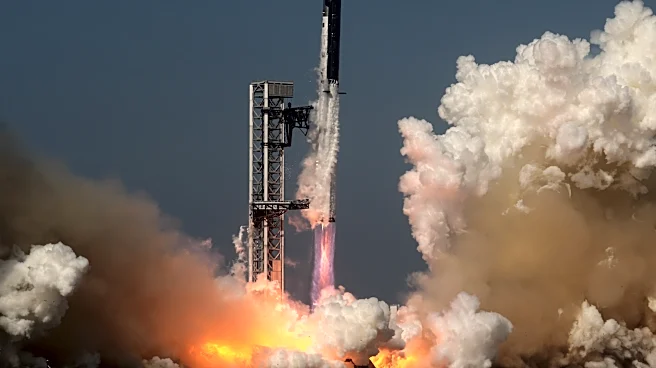
The Saturn V rocket's legacy extends beyond its technological achievements, leaving a profound cultural and scientific impact. The Apollo missions captured the imagination of people around the world, symbolizing the spirit of exploration and the pursuit of knowledge. The iconic image of the Saturn V launching into space remains a powerful representation of human ingenuity and determination.
The scientific discoveries made possible by the Saturn V and the Apollo program have significantly advanced our understanding of the Moon and the broader universe. The lunar samples collected during the missions have provided valuable insights into the Moon's composition and history, while the experiments conducted on the lunar surface have contributed to our knowledge of planetary science and geology.
The Saturn V rocket's impact on space exploration and technology is undeniable, leaving a lasting legacy that continues to inspire and inform future endeavors. Its success in launching humans to the Moon and advancing our understanding of space travel has cemented its place in history as a symbol of human achievement and the power of scientific collaboration. As we look to the future of space exploration, the lessons learned from the Saturn V will continue to guide and inspire us on our journey to the stars.