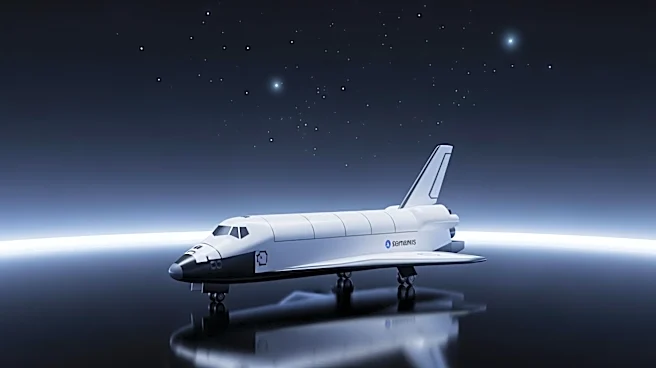




The STS-41-C mission, launched on April 6, 1984, was a groundbreaking endeavor in NASA's Space Shuttle program. As the eleventh mission of the Space Shuttle and the fifth for Challenger, STS-41-C was notable for its technological innovations and operational achievements. This mission set new precedents in satellite repair and deployment, showcasing the Space Shuttle's capabilities as a versatile platform for space exploration.
Technological Innovations
One of the most significant
technological advancements demonstrated during STS-41-C was the use of a direct ascent trajectory. This was the first time a Space Shuttle mission employed this method, allowing Challenger to reach its orbit with minimal use of its Orbiter Maneuvering System (OMS) engines. This innovation not only conserved fuel but also demonstrated the Shuttle's ability to achieve precise orbital insertions.
The mission also featured the use of the Manned Maneuvering Unit (MMU), a jetpack-like device that allowed astronauts to move freely in space. Astronaut George Nelson used the MMU to attempt the capture of the Solar Maximum Mission satellite, showcasing the potential for astronauts to perform complex tasks outside the Shuttle.
Operational Achievements
STS-41-C was tasked with two primary objectives: repairing the Solar Maximum Mission satellite and deploying the Long Duration Exposure Facility (LDEF). The successful deployment of LDEF on the second day of the mission was a significant achievement, as it carried 57 scientific experiments from researchers across eight countries.
The repair of the Solar Max satellite was a complex operation that required precise coordination and problem-solving. Initial attempts to capture the satellite using the Trunnion Pin Acquisition Device (TPAD) were unsuccessful, leading to a temporary suspension of the operation. However, the mission team, in collaboration with the Goddard Space Flight Center, managed to stabilize the satellite, allowing for its successful capture and repair.
Legacy and Impact
The successful completion of the STS-41-C mission had a lasting impact on the Space Shuttle program and satellite maintenance operations. The mission demonstrated the feasibility of in-orbit satellite repairs, paving the way for future missions that would involve similar tasks. The ability to repair and maintain satellites in space extended their operational lifespans and enhanced their scientific contributions.
STS-41-C also highlighted the importance of international collaboration in space research, as evidenced by the diverse experiments carried by the LDEF. The mission's success reinforced the Space Shuttle's role as a critical tool for advancing human knowledge and capabilities in space. As a pioneering mission, STS-41-C set the stage for future innovations and achievements in space exploration.