


Airfoils are fundamental to the science of aerodynamics, as they are designed to generate lift while minimizing drag. Understanding the principles that govern these forces is essential for optimizing airfoil performance in various applications. This article delves into the scientific concepts behind lift and drag, explaining how airfoils achieve their remarkable efficiency.
The Physics of Lift Generation
Lift is the force that allows an aircraft to rise into the air, and it is primarily
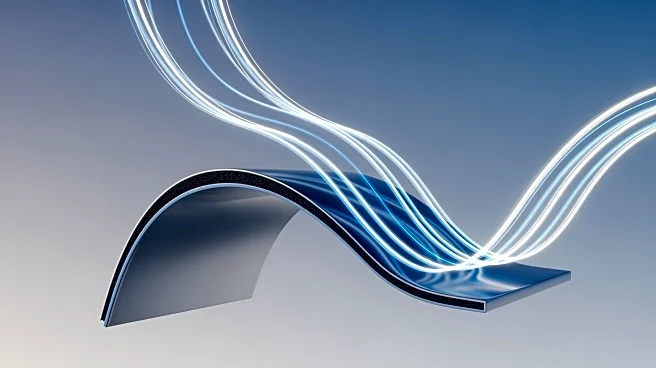
generated by the shape and orientation of the airfoil. When an airfoil moves through a fluid, such as air, it deflects the oncoming flow, creating a pressure difference between the upper and lower surfaces. This pressure difference results in an upward force known as lift.
The angle of attack, which is the angle between the chord line of the airfoil and the oncoming airflow, plays a crucial role in lift generation. Most airfoils require a positive angle of attack to produce lift, although cambered airfoils can generate lift even at zero angle of attack. The lift force is also influenced by the airfoil's curvature, or camber, which affects the flow pattern around the airfoil.
Understanding Drag and Its Minimization
While lift is essential for flight, drag is an opposing force that must be minimized to improve efficiency. Drag is the resistance an object encounters as it moves through a fluid, and it can be divided into two main components: pressure drag and skin friction drag. Pressure drag arises from the pressure difference between the front and rear of the airfoil, while skin friction drag is caused by the viscous forces within the boundary layer of the fluid.
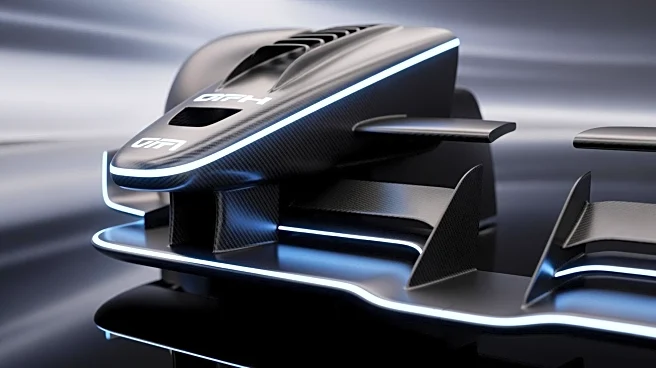
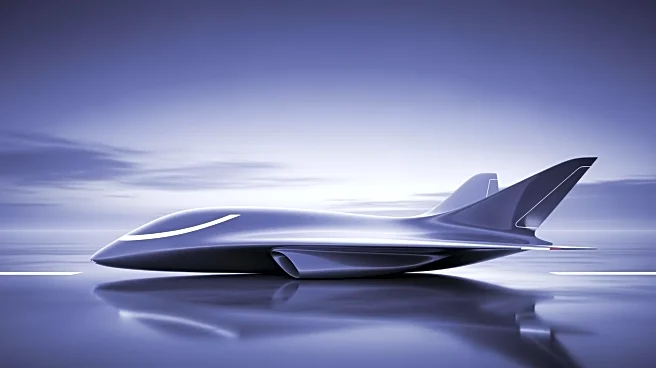
Airfoil design aims to minimize drag by optimizing the shape and surface characteristics of the airfoil. For subsonic airfoils, a rounded leading edge helps reduce sensitivity to angle of attack, while a sharp trailing edge minimizes pressure drag. In contrast, supersonic airfoils feature thin, sharp-edged profiles to prevent the formation of detached bow shocks, which significantly increase wave drag.
The Role of Advanced Theories and Technologies
The study of airfoil lift and drag has been greatly enhanced by advanced theories and technologies. Thin airfoil theory, for example, provides a mathematical framework for understanding the relationship between angle of attack and lift in two-dimensional, inviscid flows. This theory has been instrumental in predicting airfoil performance and guiding design improvements.
Modern computational fluid dynamics (CFD) tools have further revolutionized airfoil design by allowing engineers to simulate and analyze complex flow patterns around airfoils. These simulations provide valuable insights into the effects of different design parameters on lift and drag, enabling more precise optimization of airfoil shapes.
As technology continues to advance, the science of airfoil lift and drag will remain a critical area of research, driving innovations in aerodynamics and contributing to the development of more efficient and capable aircraft.