


Boiling is a fascinating physical process that transforms a liquid into a gas or vapor. This transformation occurs when a liquid is heated to its boiling point, where the vapor pressure of the liquid equals the atmospheric pressure surrounding it. Understanding the science behind boiling reveals the intricate balance of pressure and temperature that governs this everyday phenomenon.
The Mechanics of Boiling
Boiling is characterized by the rapid phase transition from liquid
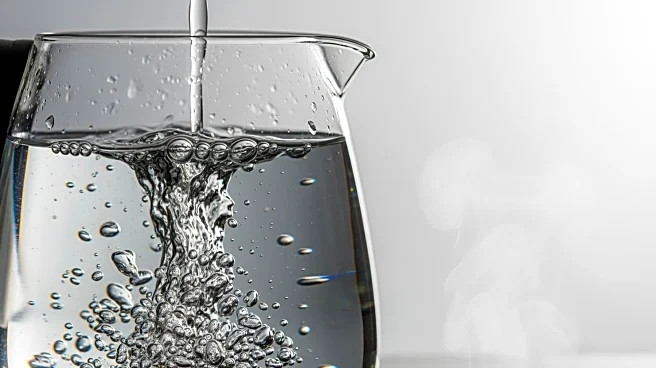
to gas. This process begins when the liquid reaches its boiling point, a temperature at which its vapor pressure matches the atmospheric pressure. At this point, bubbles of vapor form within the liquid and rise to the surface, releasing gas into the air. This is distinct from evaporation, which occurs only at the surface of the liquid.
There are different types of boiling, including nucleate boiling, where small bubbles form at discrete points, and critical heat flux boiling, where a vapor film forms on the surface. Transition boiling is an unstable form that combines elements of both types. The boiling point of water is typically 100°C at sea level, but it decreases at higher altitudes due to lower atmospheric pressure.
Boiling and Heat Transfer
Boiling is not just about temperature; it involves complex heat transfer mechanisms. In nucleate boiling, bubbles form on a heated surface, and the number of nucleation sites increases with surface temperature. An irregular surface or additives can facilitate nucleate boiling over a broader temperature range. Conversely, a smooth surface may lead to superheating, where the liquid exceeds its boiling point without boiling.
Critical heat flux describes the thermal limit where a phase change occurs during heating, causing localized overheating. As the boiling surface heats above a critical temperature, a vapor film forms, reducing heat transfer efficiency. This phenomenon is crucial in applications like power plants, where efficient heat transfer is essential.
Boiling in Different Contexts
Boiling is used in various cooking methods, including blanching, steaming, and poaching. It is also a method for making water potable by killing microbes and viruses. The sensitivity of microorganisms to heat varies, but holding water at 100°C for one minute inactivates most pathogens. Boiling is a simple yet effective way to disinfect water, especially in emergency situations or areas without proper purification systems.
In summary, boiling is a complex physical process influenced by temperature, pressure, and surface characteristics. Its applications range from cooking to water purification, highlighting its importance in everyday life. Understanding the science behind boiling allows us to appreciate the delicate balance of forces that make this process possible.