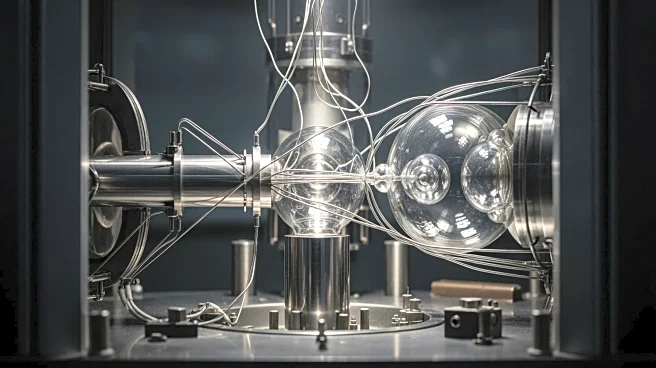




Robert Hofstadter was a trailblazer in the field of nuclear physics, known for his innovative research on electron scattering in atomic nuclei. His work not only earned him the Nobel Prize in Physics in 1961 but also left a lasting impact on the scientific community. Hofstadter's contributions have been instrumental in shaping our understanding of atomic structures and continue to influence research today.
Pioneering Research in Electron Scattering
Hofstadter's most notable contribution to
nuclear physics was his pioneering research on electron scattering. This technique involves directing a beam of electrons at atomic nuclei to study their structure. By analyzing how the electrons scatter, scientists can infer details about the size, shape, and composition of the nuclei.
Hofstadter's work in this area provided critical insights into the structure of nucleons, which are the protons and neutrons that make up atomic nuclei. His research revealed important information about the distribution of charge within nucleons, significantly advancing the field of nuclear physics. This breakthrough laid the groundwork for future studies and opened new avenues for exploring the fundamental components of matter.
Recognition and Awards
The significance of Hofstadter's contributions to nuclear physics was recognized with several prestigious awards. In 1961, he was awarded the Nobel Prize in Physics, an honor he shared with Rudolf Mössbauer. This accolade highlighted the importance of his work in electron scattering and its impact on the scientific community.
In addition to the Nobel Prize, Hofstadter received the National Medal of Science in 1986 and the Dirac Medal in 1987. These awards further underscore the lasting influence of his research and his role as a leading figure in the field of nuclear physics. Hofstadter's achievements have inspired countless scientists and continue to be a source of inspiration for ongoing research.
Legacy and Influence
Robert Hofstadter's legacy in nuclear physics is profound. His research on electron scattering has become a fundamental technique in the study of atomic nuclei, and his discoveries have paved the way for new advancements in the field. Hofstadter's work has not only deepened our understanding of atomic structures but also contributed to the development of technologies and methodologies used in modern physics research.
Hofstadter's influence extends beyond his scientific contributions. As a mentor and educator, he inspired a generation of physicists who have continued to build on his work. His legacy is a testament to the power of scientific inquiry and the enduring impact of groundbreaking research.