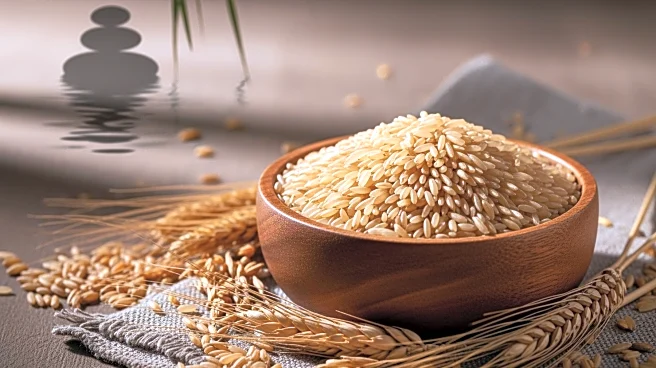




Grains have long held a symbolic role in Chinese culture, representing civilization and sustenance. However, Daoist practices challenge this traditional view by advocating for grain avoidance as a path to transcendence. This article examines the symbolic importance of grains in Chinese culture and the Daoist rejection of grain consumption.
Grains as Symbols of Civilization
In traditional Chinese culture, grains are seen as a symbol of civilization and the state. The Wangzhi chapter
of the Liji uses cooking food and eating grains to culturally classify the Chinese "Middle Kingdom" from the "Four Barbarians." Grains were considered essential for sustaining human life and were associated with agricultural divinities such as Shennong, the Farmer God, who taught humans to cultivate and eat the five grains.
The sheji altars to soil and grain gods were the ritual center of a Chinese state, symbolizing the nation's prosperity and stability. Offerings of grain were necessary for ancestral sacrifices, emphasizing the cultural importance of grains in feeding both natural and ancestral spirits.
Daoist Rejection of Grains
Despite the cultural significance of grains, Daoist practices advocate for grain avoidance as a means of achieving immortality. The Daoist philosophy views grains as impure and earthly, contrasting with the consumption of qi, which is seen as heavenly and pure. By rejecting grains, Daoists aim to nourish their inner nature and replace vulgar food with the Food of the Breath.
Grain abstention was seen as a rejection of the agricultural-based Chinese society, which relied heavily on grains for food, sacrifices, and tax payments. Daoists believed that agriculture led to the destruction of the natural environment and the imbalances of human civilization.
Modern Interpretations and Cultural Impact
The Daoist rejection of grains has influenced various aspects of Chinese culture and continues to be a subject of interest in modern interpretations. While traditional Chinese mythology depicted cooking and agriculture as key elements of civilization, Daoists created a counter-narrative to justify grain avoidance.
Today, the practice of grain avoidance is studied through medical and nutritional lenses, exploring its potential health benefits and risks. Although not widely practiced, the symbolic rejection of grains in Daoist philosophy offers a unique perspective on the relationship between food, culture, and spirituality.
The cultural impact of grain avoidance highlights the tension between traditional values and alternative practices, providing insight into the diverse beliefs and philosophies that have shaped Chinese history.