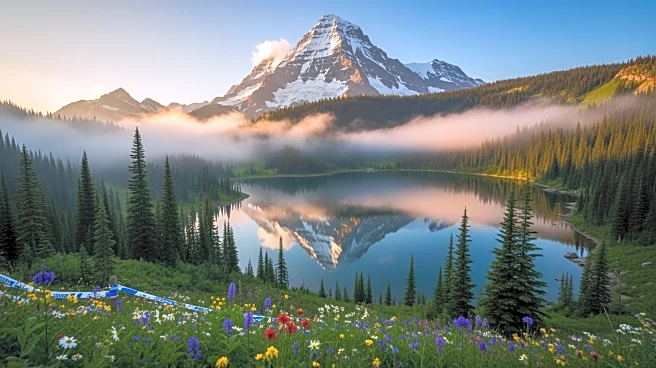




Mount Rainier National Park is a haven for nature enthusiasts, offering a diverse array of natural wonders and wildlife. Established in 1899, the park encompasses 236,381 acres, including the iconic Mount Rainier, a 14,410-foot stratovolcano. This article explores the park's stunning landscapes, unique ecosystems, and the wildlife that calls it home.
Majestic Landscapes and Glaciers
Mount Rainier National Park is renowned for its breathtaking landscapes, which include valleys, waterfalls,
subalpine meadows, and old-growth forests. The park's elevation ranges from 1,600 feet to over 14,000 feet, creating a variety of climatic and environmental conditions. More than 25 glaciers descend the flanks of Mount Rainier, contributing to the park's dramatic scenery.
The Carbon Glacier, the largest glacier by volume in the contiguous United States, and the Emmons Glacier, the largest by area, are notable features of the park. These glaciers and snowfields cover about 35 square miles, providing a unique opportunity for visitors to witness the dynamic processes of glacial movement and melting.
Diverse Flora and Fauna
The park's diverse ecosystems support a wide range of flora and fauna. More than 960 vascular plant species and over 260 nonvascular plant species have been identified within the park. The vegetation varies across the park's elevation gradient, with alpine meadows and tundra at higher elevations and dense forests at lower elevations.
Mount Rainier National Park is home to a variety of mammals, including cougars, black bears, raccoons, coyotes, and mountain goats. Birdwatchers can spot raptors such as the northern goshawk, bald eagle, and peregrine falcon, as well as other bird species like the thrush, chickadee, and spotted owl. The park's rivers and streams are inhabited by fish species such as bull trout, cutthroat trout, and rainbow trout.
Seasonal Attractions and Activities
The park's natural features vary with the seasons, offering visitors unique experiences throughout the year. In spring, the remaining snow and waterfalls are visible from many trails, while summer brings a wildflower bloom that attracts many visitors. The park's diverse landscapes provide opportunities for hiking, mountaineering, and wildlife observation.
Mount Rainier is a popular peak for mountaineering, with approximately 10,000 attempts per year. The Wonderland Trail, which circles the mountain, offers a challenging yet rewarding experience for hikers. Whether exploring the park's glaciers, meadows, or forests, visitors are sure to be captivated by the natural beauty and diversity of Mount Rainier National Park.