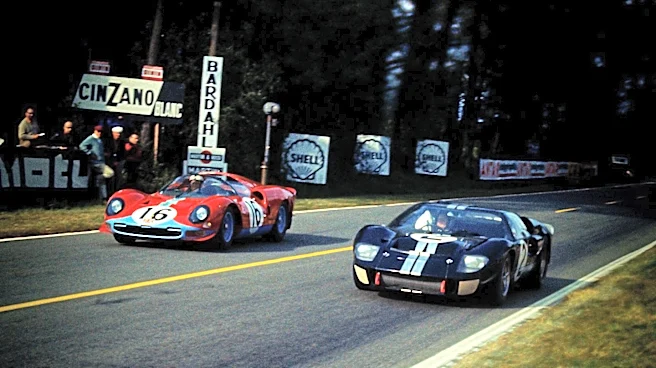









The 1967 24 Hours of Le Mans was a landmark event in the world of endurance racing, marking the 35th Grand Prix of Endurance. Held on June 10 and 11, this race was not only a part of the 1967 World Sportscar Championship but also a stage for record-breaking performances. Ford's victory with the Mk IV, driven by Dan Gurney and A.J. Foyt, was a historic moment, as it was the only all-American victory in the history of Le Mans. This article delves into
the records set during this iconic race and its lasting impact on motorsport.
A Record-Breaking Performance
The 1967 race was notable for its record-breaking achievements. Ford's Mk IV, driven by Dan Gurney and A.J. Foyt, not only secured the victory but also set a new distance record by covering over 5,000 kilometers for the first time. This feat was a testament to the car's engineering and the drivers' skill, as they managed to maintain a blistering pace throughout the 24-hour race. The Mk IV's performance was further highlighted by its ability to set a new lap record, showcasing the advancements in speed and endurance.The race also saw the largest engine to win at Le Mans, with the Ford Mk IV's 7-liter engine proving its mettle against the competition. This victory was significant as it demonstrated the potential of American engineering in a field traditionally dominated by European manufacturers. The combination of speed, reliability, and strategic driving allowed Ford to break all previous records, setting a new benchmark for future races.
The All-American Triumph
The 1967 Le Mans was a historic moment for American motorsport, as it marked the first and only time an all-American team won the prestigious race. The victory was achieved by American drivers Dan Gurney and A.J. Foyt, driving a car designed and built entirely in the United States. The team, Shelby-American Inc., along with Ford as the chassis constructor and engine manufacturer, and Goodyear providing the tires, made this a truly American triumph.This victory was not just about national pride; it was a demonstration of the capabilities of American automotive engineering and racing talent. The success of the Ford Mk IV at Le Mans was a significant achievement that resonated throughout the motorsport community, inspiring future generations of American racers and manufacturers.
Legacy and Impact
The 1967 24 Hours of Le Mans left a lasting legacy in the world of motorsport. The records set during the race stood as a benchmark for future competitions, pushing manufacturers to innovate and improve their vehicles. The all-American victory also paved the way for increased American participation in international racing events, showcasing the potential of American engineering on the global stage.The race's impact extended beyond the track, influencing the design and development of sports cars for years to come. The advancements in speed, endurance, and engineering demonstrated at Le Mans in 1967 continue to inspire and challenge manufacturers and racers alike, cementing the event's place in the annals of motorsport history.