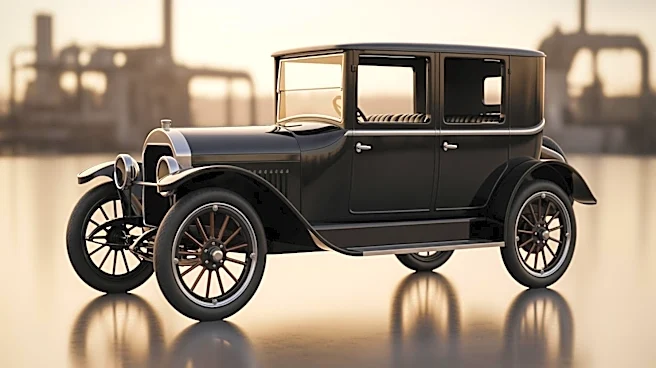







The Ford Model T, introduced in 1908, is often credited with revolutionizing the automobile industry by making cars affordable for the average American. This transformation was largely due to the innovative mass production techniques employed by the Ford Motor Company. By shifting from handcrafted methods to assembly line production, Ford was able to significantly reduce costs and increase efficiency, making the Model T a symbol of industrial innovation
and economic accessibility.
The Birth of Mass Production
Before the Model T, automobiles were considered luxury items, accessible only to the wealthy. Early cars were expensive and often unreliable, limiting their appeal to a small segment of society. However, Henry Ford envisioned a vehicle that could be affordable for the masses. To achieve this, Ford and his team developed a system of mass production that would forever change manufacturing.
The introduction of the moving assembly line in 1913 was a pivotal moment. This innovation allowed Ford to produce cars at an unprecedented rate, reducing the time it took to build a car from over 12 hours to just 93 minutes. The assembly line not only increased production speed but also lowered costs, enabling Ford to reduce the price of the Model T from $780 in 1910 to $290 by 1924. This price drop made car ownership a reality for many middle-class Americans.
Impact on the Automobile Industry
The success of the Model T and its production methods had a profound impact on the automobile industry. Ford's approach to manufacturing set a new standard, prompting other car manufacturers to adopt similar techniques. The efficiency of the assembly line meant that cars could be produced in large quantities, meeting the growing demand from consumers.
This shift also had broader economic implications. The rise of the automobile industry created numerous jobs, not only in car manufacturing but also in related sectors such as steel, rubber, and glass production. The Model T's affordability and popularity spurred the development of infrastructure, including roads and highways, further integrating the automobile into American life.
A Legacy of Innovation
The legacy of the Ford Model T extends beyond its role in making cars affordable. It represents a turning point in industrial production, showcasing the power of innovation to transform industries and societies. The Model T's success demonstrated the potential of mass production to lower costs and increase accessibility, principles that continue to influence manufacturing today.
While the Model T was eventually surpassed by more modern vehicles, its impact on the automobile industry and manufacturing processes remains significant. The techniques pioneered by Ford laid the groundwork for the mass production systems that are now standard in industries worldwide, cementing the Model T's place in history as a catalyst for change.