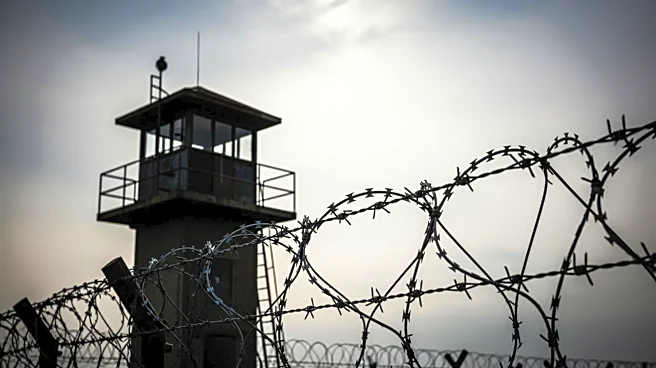

The Federal Correctional Institution, Leavenworth, has been the site of numerous significant events and incidents throughout its history. From daring escapes to high-profile executions, these occurrences
have contributed to the facility's storied past. This article examines some of the most notable events that have taken place at FCI Leavenworth.
Daring Escapes
One of the most famous incidents in the history of FCI Leavenworth occurred in 1910 when six prisoners executed a daring escape. The escapees smashed through the prison gates using a hijacked railroad locomotive. While five of the men were quickly recaptured, one, Frank Grigware, managed to evade capture and fled to Canada. Grigware's escape and subsequent life in Canada, where he became the mayor of Spirit River, Alberta, added a layer of intrigue to the incident.
Another notable escape involved Basil Banghart, who managed to escape from Leavenworth three times. His repeated escapes highlighted the challenges of maintaining security in a maximum-security facility and underscored the ingenuity of some inmates in devising escape plans.
Executions and Capital Punishment
FCI Leavenworth has also been the site of several executions, marking its role in the federal capital punishment system. The first recorded execution at the facility took place in 1930 when serial killer Carl Panzram was hanged. Panzram's execution was followed by others, including the first double execution in 1938, when Robert Suhay and Glenn Applegate were hanged for murder.
These executions were part of a broader federal policy on capital punishment, and Leavenworth played a significant role in carrying out these sentences. The facility's history of executions reflects the evolving attitudes toward capital punishment in the United States over the 20th century.
Wartime and Social Impact
During World War II, FCI Leavenworth housed Japanese American conscientious objectors who refused military service in protest of the wartime incarceration of themselves and their families. This period in the prison's history highlights its role in broader social and political issues, as the facility became a site of protest and resistance.
The presence of these conscientious objectors at Leavenworth underscores the complex interplay between the prison system and societal events. It also reflects the ways in which the facility has been used to address issues beyond traditional criminal justice, serving as a tool for managing dissent during times of national crisis.
In summary, the notable events and incidents at FCI Leavenworth provide a window into the facility's multifaceted history. From escapes and executions to its role in wartime protest, these occurrences have shaped the identity of Leavenworth as a key institution within the U.S. federal prison system.