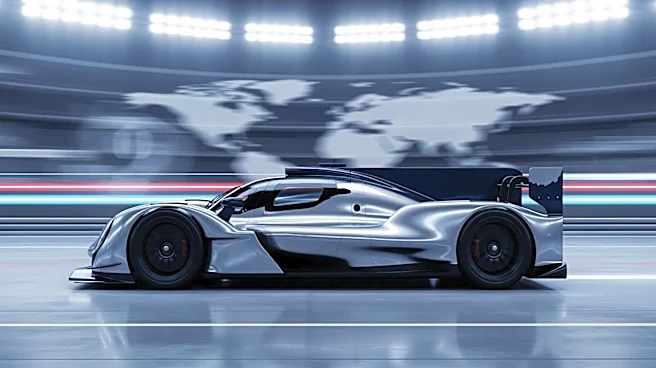







Group C motorsport, introduced by the FIA in 1982, quickly became a global phenomenon. Its unique regulations and emphasis on fuel efficiency attracted manufacturers and fans from around the world, leading to the establishment of various racing series across different regions. This article explores the international reach and influence of Group C motorsport, highlighting its impact on the global racing community.
European Dominance
Europe was at the heart of Group C
motorsport, with the FIA's World Endurance Championship and World Sports-Prototype Championship serving as the premier series for the category. These championships attracted top manufacturers like Porsche, Lancia, and Jaguar, who competed fiercely on iconic tracks such as Le Mans and Spa-Francorchamps.
The European racing scene was characterized by intense competition and technological innovation. Manufacturers pushed the boundaries of automotive engineering, resulting in thrilling races that captivated audiences. The success of Group C in Europe set the stage for its expansion to other regions, as the category's popularity continued to grow.
Expansion to North America
Group C's influence extended beyond Europe, reaching North America through the IMSA Grand Touring Prototype (GTP) series. While the IMSA GTP series had its own set of regulations, they were broadly similar to those of Group C, allowing for cross-competition between the two categories.
The North American series attracted manufacturers like Ford and Nissan, who saw the opportunity to showcase their engineering prowess on a new stage. The inclusion of Group C-style cars in the IMSA GTP series brought a new level of excitement to North American motorsport, drawing in fans and increasing the category's global appeal.
Impact in Asia and Beyond
Group C's reach also extended to Asia, where the All Japan Sports Prototype Championship adopted the category's regulations. This series provided a platform for Japanese manufacturers like Toyota, Nissan, and Mazda to compete on an international level, further enhancing the global presence of Group C.
The success of Group C in Asia demonstrated the category's universal appeal and its ability to bring together manufacturers and fans from diverse backgrounds. The international nature of Group C racing fostered a sense of camaraderie and competition among participants, contributing to the category's enduring legacy.
A Lasting Legacy
Although Group C was eventually replaced by Group GT1 in 1993, its impact on the global motorsport community remains significant. The category's emphasis on innovation and international competition set a new standard for racing, inspiring future generations of engineers and drivers.
Group C's global influence is a testament to its success as a motorsport category. Its ability to unite manufacturers and fans from around the world highlights the universal appeal of racing and the enduring legacy of Group C in the history of motorsport.