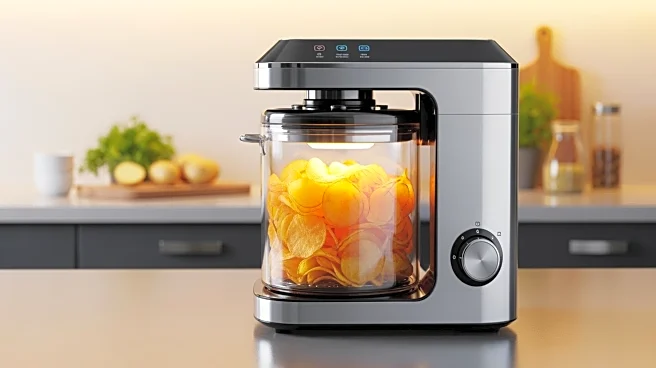




Vacuum fryers represent a significant advancement in cooking technology, offering a unique approach to deep frying. Unlike traditional fryers, vacuum fryers operate within a vacuum chamber, allowing food to be cooked at lower temperatures. This method not only preserves the natural colors and flavors of food but also reduces the formation of harmful compounds like acrylamide. This article delves into the workings of vacuum fryers and their benefits,
particularly in the production of fruit chips in Southeast Asia.
The Mechanics of Vacuum Frying
Vacuum fryers are designed to cook food in a vacuum chamber, which significantly lowers the boiling point of water. This means that food can be fried at temperatures as low as 130 °C (266 °F), compared to the 170 °C (338 °F) typically used in atmospheric fryers. The lower temperature is crucial for maintaining the natural colors and flavors of the food, which can be lost at higher temperatures. Additionally, the reduced temperature minimizes the formation of acrylamide, a compound suspected of being carcinogenic.
The vacuum environment also allows for the frying of heat-sensitive foods that might otherwise burn in a standard fryer. This makes vacuum fryers particularly suitable for delicate items like fruit chips, which are popular in Southeast Asia. The vacuum frying process not only enhances the quality of the final product but also reduces fat absorption, making the food less greasy and potentially healthier.
Applications and Benefits in Southeast Asia
In Southeast Asia, countries like the Philippines, Thailand, China, and Indonesia have embraced vacuum fryers for producing fruit chips. These batch-type vacuum fryers are ideal for small production companies, allowing them to create high-quality products with preserved flavors and colors. The ability to fry at lower temperatures is particularly beneficial for fruit chips, which require careful handling to maintain their delicate structure and taste.
The use of vacuum fryers in these regions highlights their versatility and efficiency. By reducing fat absorption, vacuum fryers produce a lighter, less oily product, which is appealing to health-conscious consumers. This method also extends the shelf life of the frying oil, reducing production costs and making it a cost-effective solution for small businesses.
Continuous Vacuum Fryers for Larger Production
For larger-scale operations, continuous vacuum fryers offer an efficient solution. These systems are designed to handle greater quantities of food, with a vacuum frying pan installed in a stainless steel vacuum tube. The process involves a transport belt that moves the finished product out of the fryer, ensuring a continuous flow of production.
Continuous vacuum fryers also extend the life of the frying oil, further reducing costs. The system is controlled by a programmable logic controller, ensuring precise temperature control and consistent product quality. This makes continuous vacuum fryers an attractive option for larger companies looking to produce high volumes of vacuum-fried products efficiently.