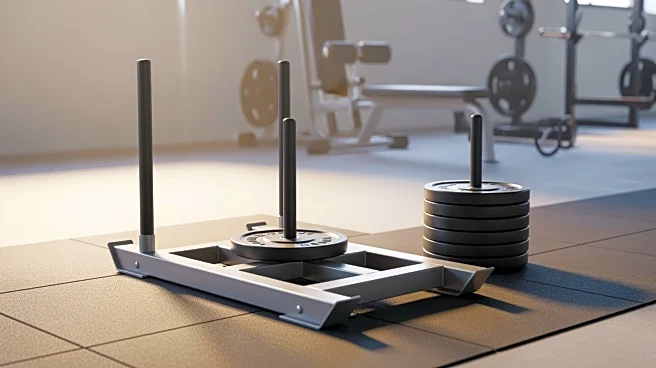




Training sleds are a versatile piece of exercise equipment used primarily for resistance training. They are designed to be pushed or pulled, often with added weight, to provide a comprehensive workout targeting multiple muscle groups. This article explores how training sleds are utilized in resistance training to improve strength and endurance.
Enhancing Strength with Training Sleds
Training sleds are particularly effective for building strength. By adding weight to the sled, users can
increase the resistance they must overcome, which in turn requires greater muscular effort. This type of training engages the muscles in the legs, core, and upper body, providing a full-body workout. The act of pushing or pulling a weighted sled mimics natural movements, making it a functional exercise that translates well to real-world activities.
The resistance provided by a training sled can be adjusted to suit different fitness levels. Beginners might start with a lighter load to focus on form and technique, while more advanced users can add significant weight to challenge their strength. This adaptability makes training sleds a valuable tool for progressive overload, a key principle in strength training that involves gradually increasing the weight or resistance to stimulate muscle growth.
Improving Endurance with Sled Training
In addition to building strength, training sleds are also used to enhance endurance. The continuous effort required to move a sled over a distance can significantly improve cardiovascular fitness. This type of training is often incorporated into high-intensity interval training (HIIT) sessions, where short bursts of intense activity are alternated with periods of rest or lower-intensity exercise.
Sled training can be particularly beneficial for athletes who need to develop both strength and endurance. For example, football players might use sleds to simulate the physical demands of pushing against an opponent, while sprinters might use them to improve their explosive power and speed. The versatility of sled training allows it to be tailored to the specific needs of different sports and activities.
The Versatility of Training Sleds
One of the key advantages of training sleds is their versatility. They can be used on a variety of surfaces, including grass, turf, and concrete, making them suitable for both indoor and outdoor workouts. This flexibility allows users to incorporate sled training into their routine regardless of their environment.
Moreover, training sleds can be used in combination with other exercises to create a comprehensive workout. For instance, a circuit might include sled pushes, bodyweight exercises, and agility drills, providing a well-rounded session that targets multiple aspects of fitness. This adaptability makes training sleds a popular choice for personal trainers and fitness enthusiasts alike.
In conclusion, training sleds are a valuable tool in resistance training, offering benefits in both strength and endurance. Their versatility and adaptability make them suitable for a wide range of fitness levels and goals, making them an essential component of any well-rounded exercise program.