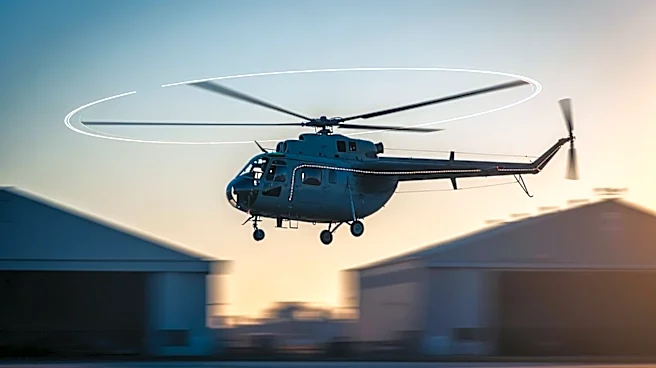

The Sikorsky R-4 holds a special place in aviation history as the world's first mass-produced helicopter. Introduced in 1942, it marked a significant milestone in military aviation, providing new capabilities
that were previously unattainable with fixed-wing aircraft. The R-4's development and deployment during World War II showcased its versatility and effectiveness, setting the stage for the widespread use of helicopters in military operations.
Development and Features
The Sikorsky R-4 was developed from the VS-300, a prototype designed by Igor Sikorsky. The VS-300 was the first viable American helicopter, featuring a single main rotor and a tail rotor to counteract torque. This configuration became the standard for helicopter design, offering stability and control that were crucial for practical use.
The R-4 was powered by a radial engine and had a single main rotor, which allowed it to take off and land vertically, hover, and fly in multiple directions. These capabilities made it ideal for operations in challenging environments where traditional aircraft could not operate. The helicopter's design was simple yet effective, enabling it to be produced on a large scale and deployed in various military roles.
Military Applications
During World War II, the Sikorsky R-4 was used primarily for search and rescue missions. Its ability to hover and maneuver in tight spaces made it invaluable for retrieving downed pilots and transporting wounded soldiers from difficult terrains. The R-4's deployment in the Burma campaign and other harsh environments demonstrated its effectiveness in military operations.
The helicopter's versatility also allowed it to be used for reconnaissance and transport missions. Its ability to operate in areas without runways provided a strategic advantage, enabling rapid deployment and extraction of personnel and equipment. The R-4's success in these roles highlighted the potential of helicopters in military aviation, leading to further development and innovation in helicopter technology.
Legacy and Influence
The Sikorsky R-4's introduction marked the beginning of a new era in military aviation. Its success paved the way for the development of more advanced helicopters, which have become integral to modern military operations. The R-4's design principles continue to influence helicopter technology, with the single main rotor and tail rotor configuration remaining a standard in the industry.
Today, helicopters are used in a wide range of military applications, from combat and transport to search and rescue. The R-4's legacy lives on in these operations, as it demonstrated the immense potential of rotary-wing aircraft in enhancing military capabilities. Igor Sikorsky's vision and innovation have left a lasting impact on aviation, transforming the way military forces operate and respond to challenges.