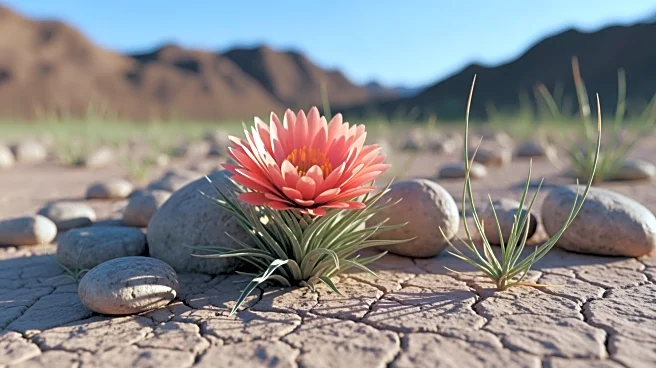


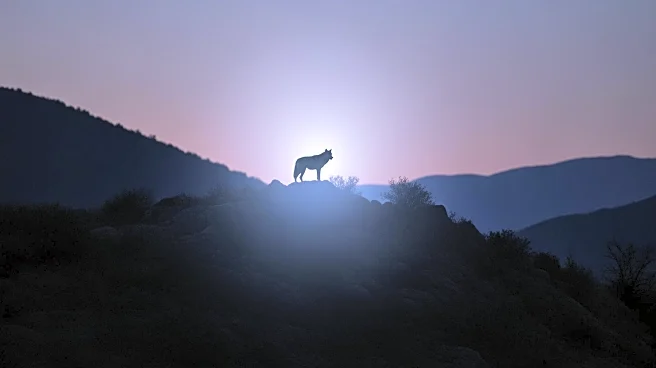
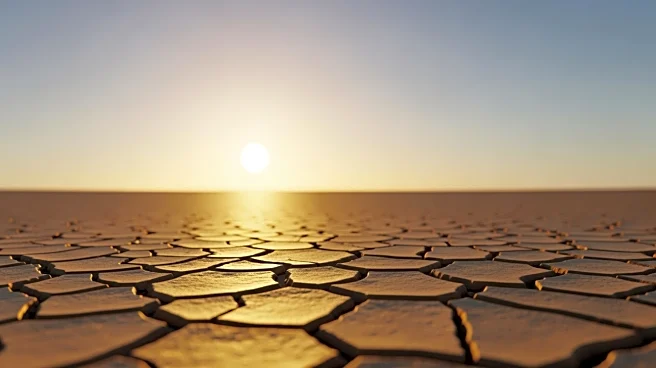
The Great Basin Desert, spanning parts of Nevada, Utah, and California, is a region of remarkable biodiversity. Despite its arid conditions, the desert supports a wide array of plant and animal species, many of which are uniquely adapted to its challenging environment. This article explores the rich biodiversity of the Great Basin Desert, highlighting the various ecosystems and the species that inhabit them.
Plant Life and Adaptations
The plant life in the Great Basin Desert
is diverse, with species adapted to survive in its harsh conditions. The desert is home to several distinct plant communities, each thriving in different elevations and soil types. At lower elevations, the shadscale zone dominates, characterized by salt-tolerant plants like shadscale, iodine bush, and saltgrass. These plants have evolved to withstand high salinity and limited water availability.
As elevation increases, the sagebrush zone emerges, covering the largest area of the desert. Big sagebrush is the dominant species here, accompanied by rabbitbrush, bitterbrush, and various grasses. These plants are well-adapted to the desert's dry conditions, with deep root systems that allow them to access water from deeper soil layers. The pinyon-juniper community occupies higher elevations, where singleleaf pinyon pine and Utah juniper thrive, providing habitat for numerous animal species.
Animal Diversity
The Great Basin Desert is home to a wide variety of animal species, each adapted to the desert's unique environment. More than 600 species of vertebrates inhabit the region, including mammals, birds, reptiles, and amphibians. Notable mammals include the pronghorn, mule deer, and the elusive mountain lion. Smaller mammals, such as kangaroo rats and jackrabbits, are also common, having adapted to the desert's arid conditions.
Birds are abundant in the Great Basin Desert, with species like the sage grouse, golden eagle, and various songbirds making their home in the region. Reptiles, including lizards and snakes, are well-suited to the desert's warm climate, with species like the Great Basin rattlesnake and horned lizard being common sights. The desert's diverse habitats provide ample opportunities for these animals to thrive, despite the challenging conditions.
Conservation Concerns
While the Great Basin Desert boasts impressive biodiversity, many species face threats from habitat loss and environmental changes. Human activities, such as groundwater pumping, road construction, and mining, have altered the desert's landscape, impacting the habitats of numerous species. As a result, several species in the region are considered of conservation concern, including the sage grouse and the desert tortoise.
Efforts to conserve the Great Basin Desert's biodiversity are crucial to preserving its unique ecosystems. Protecting habitats, managing land use, and addressing the impacts of climate change are essential steps in ensuring the survival of the desert's diverse plant and animal life. By understanding and appreciating the biodiversity of the Great Basin Desert, we can work towards safeguarding this remarkable region for future generations.