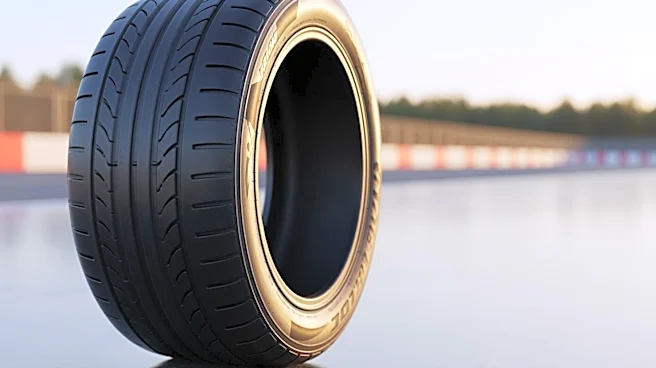








Racing slicks have played a pivotal role in the world of auto racing, offering maximum traction on dry surfaces. These specialized tires have undergone significant evolution since their inception, adapting to the demands of high-speed racing. This article delves into the history and technological advancements of racing slicks, highlighting their impact on the sport.
The Birth of Racing Slicks
The concept of racing slicks emerged in the early 1950s when M&H Tires developed the first
production slick tire for drag racing. By eliminating grooves in the tread, these tires provided the largest possible contact patch with the road, maximizing dry traction. This innovation was crucial for drag racing, where the primary goal is to achieve maximum traction to transfer power to the ground efficiently.
Initially, racing slicks were used exclusively on the driven wheels in drag racing, as the focus was on optimizing traction for acceleration. Over time, the use of slicks expanded to other forms of auto racing, including road racing, where acceleration, steering, and braking all benefit from the enhanced traction provided by these tires.
Technological Advancements
As racing slicks gained popularity, technological advancements followed. Modern slick tires are constructed from softer compounds, allowing them to become sticky when heated, which significantly enhances their grip on the road. This stickiness is achieved through the use of viscoelastic rubber that adapts to the road surface texture, combined with molecular adhesion at the interface between the tire and the road.
The absence of a tread pattern in slick tires reduces deformation under load, allowing for the use of softer compounds without excessive overheating. This development has led to slick tires that perform optimally within a specific temperature range, providing greater adhesion and improved performance on the track.
Impact on Auto Racing
The introduction and evolution of racing slicks have had a profound impact on auto racing. These tires have allowed for higher speeds and improved handling, contributing to the overall competitiveness of the sport. Racing teams can now choose different tire compounds based on weather conditions, further enhancing their strategic options during races.
However, racing slicks are not without limitations. They are unsuitable for wet conditions due to the risk of aquaplaning, as water trapped between the tire and the road surface severely diminishes traction. This has led to the development of specialized rain tires for wet weather racing, ensuring safety and performance in adverse conditions.
In conclusion, racing slicks have revolutionized auto racing by providing unmatched traction on dry surfaces. Their evolution from simple drag racing tires to sophisticated components of modern racing vehicles underscores their significance in the sport's history and ongoing development.