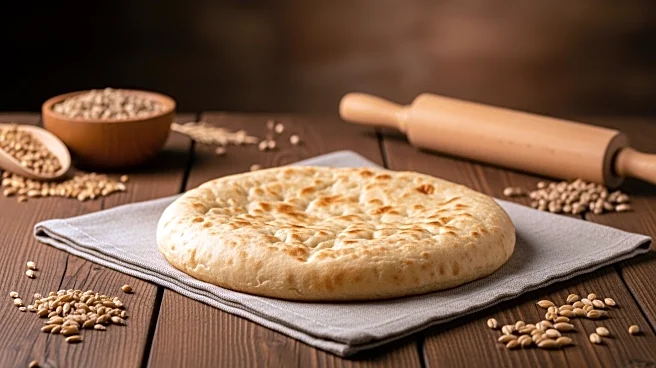



Flatbread is a staple in many cultures, known for its simplicity and versatility. Its history is as rich as its flavors, tracing back to ancient civilizations. This article delves into the historical journey of flatbread, exploring its origins and evolution over time.
Ancient Beginnings
Flatbread is one of the earliest processed foods, with evidence of its production found at ancient sites in Mesopotamia, Egypt, and the Indus civilization. These early flatbreads were
made from simple ingredients like flour, water, and salt, and were often unleavened. The Fertile Crescent in West Asia is considered the birthplace of flatbread baking systems, from where they spread to other regions.
In 2018, charred bread crumbs dating back to 12,400 BC were discovered at a Natufian site in Jordan. These crumbs were likely from flatbread made with wild barley, einkorn wheat, oats, and tubers. This discovery predates the start of agriculture in the region by 4,000 years, highlighting the long-standing tradition of flatbread making.
Evolution of Baking Techniques
Primitive clay ovens, known as tandir, were used to bake unleavened flatbread in Anatolia during the Seljuk and Ottoman eras. These ovens have been found at archaeological sites across the Middle East. The word tandir has roots in the Akkadian language, evolving into tannur in Hebrew and Arabic, tandir in Turkish, and tandur in Urdu/Hindi.
Unleavened tinuru bread was made by adhering dough to the side walls of a heated cylindrical oven. This method is still central to rural food culture in the region, symbolizing young love in local folklore. However, traditional bread baking is changing, with younger generations preferring modern conveniences.
Cultural Significance
Flatbread holds cultural significance in many regions. In Armenia, lavash is a traditional bread inscribed in the UNESCO Representative List of the Intangible Cultural Heritage of Humanity. The making and sharing of flatbread are celebrated in communities across Azerbaijan, Iran, Kazakhstan, Kyrgyzstan, and Turkey.
In Armenia, lavash is used in wedding traditions, symbolizing good fortune and fertility. In Azerbaijan, lavash is part of wedding and funeral customs, reflecting its importance in social rituals. The cultural impact of flatbread is evident in its continued presence in art, with Armenian painters often depicting women baking lavash.