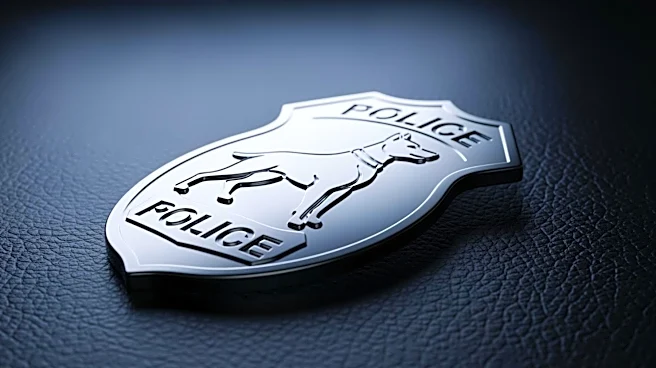







The use of dogs in law enforcement has a rich history that dates back to the Middle Ages. Over the centuries, the role of police dogs has evolved significantly, adapting to the changing needs of law enforcement agencies. Today, police dogs are an integral part of law enforcement, assisting officers in a variety of tasks and enhancing public safety.
Early History
The earliest recorded use of dogs in law enforcement can be traced back to the Middle Ages, where they
were used to track down outlaws. In the 14th century, dogs were employed in St. Malo, France, to guard docks and piers, marking the beginning of their official use in policing. By the late 14th century, bloodhounds were used in Scotland for their tracking abilities, a practice that laid the foundation for the modern use of police dogs.
As urbanization increased in the 19th century, so did the need for effective law enforcement. In London, the Bow Street Runners struggled to maintain order, leading to the formation of private associations that employed night watchmen with dogs to guard premises. This period marked a significant shift in the use of dogs for law enforcement, as they became more systematically integrated into policing efforts.
Modern Developments
The modern era of police dogs began in the late 19th and early 20th centuries. In 1889, the Metropolitan Police of London attempted to use bloodhounds to track the infamous serial killer Jack the Ripper, although the results were not successful. However, it was in Ghent, Belgium, in 1899, where the first organized police dog service program was introduced, setting a precedent for other countries to follow.
Germany played a pivotal role in the development of police dog training, selecting the German Shepherd as the ideal breed for police work. The first dog training school was established in 1920, focusing on obedience and tracking. This scientific approach to training laid the groundwork for the widespread use of police dogs in law enforcement across Europe and beyond.
Contemporary Use
Today, police dogs are used globally in various capacities, from detecting drugs and explosives to tracking suspects and protecting officers. The Belgian Malinois has emerged as a leading breed for police work, valued for its agility and focus. Despite the advancements in technology, the role of police dogs remains crucial, as their unique abilities cannot be replicated by machines.
The evolution of police dogs reflects the changing landscape of law enforcement and the ongoing need for effective crime-fighting tools. As law enforcement agencies continue to face new challenges, the role of police dogs will likely continue to evolve, ensuring their place as indispensable partners in maintaining public safety.