



In the realm of modern rocketry, few names stand as prominently as Robert H. Goddard. Often hailed as the father of modern rocketry, Goddard's groundbreaking work laid the foundation for the space exploration we know today. One of his most significant achievements was the launch of the first liquid-fueled rocket in 1926. This event marked a pivotal moment in the history of rocketry, setting the stage for future advancements in space travel.
The Historic Launch
On March
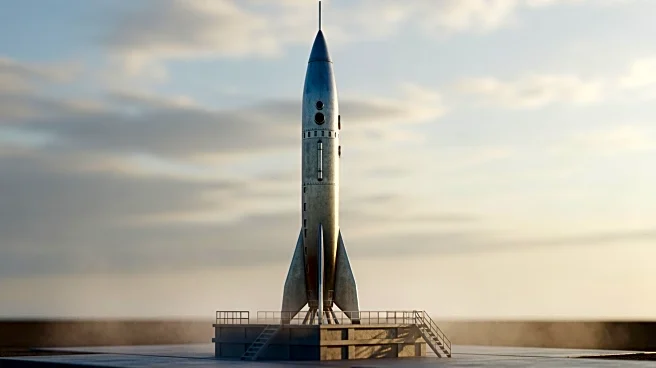
16, 1926, Robert H. Goddard successfully launched the world's first liquid-fueled rocket in Auburn, Massachusetts. This rocket, which used liquid oxygen and gasoline as propellants, was a modest creation by today's standards. It rose to a height of 41 feet during a brief 2.5-second flight before landing in a nearby cabbage field. Despite its short flight, this launch was a monumental achievement, demonstrating the potential of liquid propulsion in rocketry.
Goddard's work was driven by his vision of space exploration and the potential of rockets to reach beyond Earth's atmosphere. His experiments with liquid propellants began in earnest in 1921, and by 1926, he had developed a working model that could be tested. The success of this launch proved that liquid-fueled rockets were not only feasible but also capable of achieving significant thrust and altitude.
Challenges and Innovations
Developing a liquid-fueled rocket was no small feat. Goddard faced numerous challenges, from designing a reliable ignition system to ensuring the stability of the rocket during flight. One of the key innovations in his design was the use of a combustion chamber where the liquid fuel and oxidizer could mix and ignite. This allowed for a more controlled and efficient burn compared to solid-fueled rockets.
Goddard's work also involved extensive testing and refinement. He meticulously recorded data from each test flight, using the information to improve the design and performance of his rockets. His dedication to experimentation and innovation was crucial in overcoming the technical hurdles of early rocketry.
Legacy and Impact
The successful launch of Goddard's liquid-fueled rocket had a profound impact on the field of rocketry. It demonstrated the viability of liquid propulsion, paving the way for future developments in rocket technology. Goddard's work inspired a generation of scientists and engineers, including those who would later contribute to the development of space exploration programs in the United States and around the world.
Today, Goddard's legacy is celebrated in various ways, from the naming of NASA's Goddard Space Flight Center to the annual Dr. Robert H. Goddard Memorial Trophy, which honors significant contributions to space activities. His pioneering efforts continue to influence the field of rocketry, reminding us of the power of innovation and the pursuit of knowledge.