
The Adolphe Bridge in Luxembourg City is more than just a means of crossing the Pétrusse valley; it stands as a powerful symbol of Luxembourg's independence and architectural innovation. Built between
1900 and 1903, this bridge has become an iconic landmark, representing the country's resilience and progress. Designed by Paul Séjourné and Albert Rodange, the bridge's construction marked a significant period in Luxembourg's history, reflecting both its engineering prowess and national pride.
Architectural Marvel
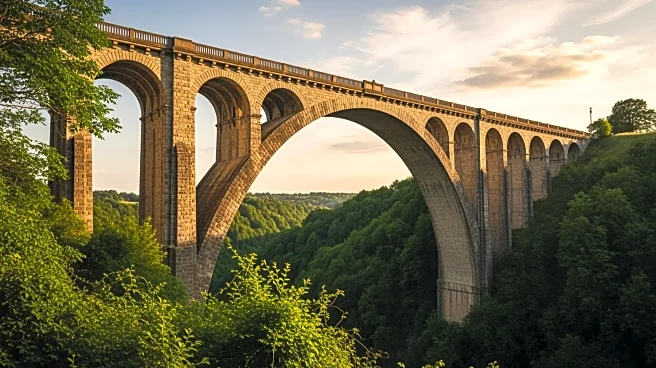
The Adolphe Bridge is a double-decked arch bridge, a testament to the engineering capabilities of its time. Its upper deck spans 153 meters, carrying road traffic and pedestrian pathways, while the lower deck, added in 2018, accommodates a bicycle path. The bridge's design was revolutionary, featuring a large central arch flanked by smaller arches, which was a daring architectural choice at the time. The central span of 84.65 meters was the largest stone arch in existence when it was built, showcasing the innovative spirit of its designers.
The bridge was constructed using sandstone quarried locally, which not only provided a sturdy structure but also connected the bridge to the region's natural resources. The use of reinforced concrete for the roadway was another forward-thinking decision, as this material was relatively new at the time. This combination of materials and design elements made the Adolphe Bridge a model for future bridge constructions, including the Walnut Lane Bridge in Philadelphia, which was directly inspired by its design.
Symbol of Independence
Beyond its architectural significance, the Adolphe Bridge holds a deep symbolic meaning for Luxembourg. Named after Grand Duke Adolphe, the bridge represents the country's independence and sovereignty. Grand Duke Adolphe was the first monarch to rule Luxembourg without being in personal union with another country, marking a new era of autonomy for the nation.
The bridge's construction coincided with a period of growth and modernization in Luxembourg, as the city expanded beyond its historical fortifications. The Adolphe Bridge facilitated this expansion, connecting the Ville Haute with the Bourbon Plateau and allowing for greater movement and development within the city. As such, it became a physical representation of Luxembourg's progress and independence.
Modern Renovations
In recent years, the Adolphe Bridge has undergone significant renovations to accommodate modern transportation needs. Between 2014 and 2017, the bridge was widened and reinforced to support the reintroduction of trams in Luxembourg City. A temporary bridge was constructed to maintain traffic flow during these renovations, highlighting the bridge's continued importance to the city's infrastructure.
The addition of the lower deck for bicycles and pedestrians reflects Luxembourg's commitment to sustainable transportation and urban development. These updates ensure that the Adolphe Bridge remains a vital part of the city's landscape, blending historical significance with contemporary functionality.
In conclusion, the Adolphe Bridge is not only an architectural marvel but also a symbol of Luxembourg's independence and progress. Its historical significance and modern adaptations make it a cherished landmark, embodying the spirit of a nation that values both its past and its future.