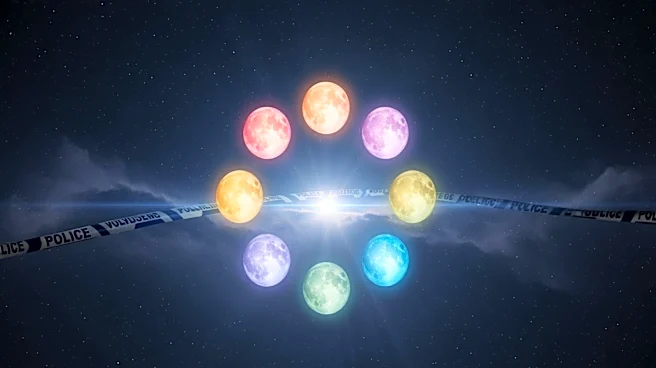






Navagraha, meaning 'nine planets' in Sanskrit, refers to the nine celestial bodies that hold significant influence in Hindu astrology. These bodies include the Sun, Moon, Mars, Mercury, Jupiter, Venus, Saturn, and the two lunar nodes, Rahu and Ketu. Each of these celestial entities is associated with a deity and is believed to impact human life on Earth. The concept of Navagraha is deeply rooted in Hindu mythology and astrology, where these planets are
seen as forces that can affect the mind and decision-making processes of individuals.
The Origins of Navagraha
The term Navagraha is derived from the Sanskrit words 'nava,' meaning nine, and 'graha,' meaning planet or seizing. Historically, the concept of planets in astrology was limited to the five visible planets, excluding Earth. However, during the Middle Ages, the term was expanded to include the Sun and Moon, making a total of seven classical planets. This expansion reflects the integration of astronomical observations with astrological beliefs, where the Sun and Moon were sometimes referred to as 'lights.' The Navagraha concept is a testament to the ancient understanding of celestial bodies and their perceived influence on human affairs.
Hindu astrology, known as Jyotisha, is one of the six auxiliary disciplines connected to the study of the Vedas. It includes the study of astronomy and the science of timekeeping, using the movements of astronomical bodies. The Navagraha are considered to be forces that capture or eclipse the mind, particularly during their active periods known as 'dasha.' These periods are believed to empower the planets to direct the affairs of people and events, signifying major life details such as profession, marriage, and longevity.
Cultural Significance of Navagraha
In Hindu culture, the Navagraha are not just astronomical entities but are revered as deities. Temples dedicated to the Navagraha are found throughout India, where devotees worship these celestial bodies to seek their blessings and mitigate any negative influences. The belief in the Navagraha's impact is so profound that newborns are traditionally named based on their Jyotisha charts, which are influenced by the positions of these planets.
The Navagraha are considered subordinate to Ishvara, the Hindu concept of a supreme being, in the administration of justice. This belief underscores the idea that the planets can influence earthly life as a reflection of one's karma. The Navagraha's influence is seen as the 'fruit of karma,' where the planetary positions at the time of one's birth are believed to shape their destiny.
Navagraha in Modern Practice
Despite the scientific community's rejection of astrology as a pseudoscience, the Navagraha continues to play a significant role in the lives of many Hindus. Astrological concepts are pervasive in the organization of the Hindu calendar and holidays, and in making major decisions such as marriage, business ventures, and moving into new homes. The Navagraha's influence is seen as a guiding force, helping individuals navigate life's challenges and opportunities.
The Navagraha's enduring presence in Hindu astrology highlights the cultural and spiritual significance of these celestial bodies. As symbols of cosmic order and influence, they continue to be revered and studied, offering insights into the ancient wisdom of Hindu astrology.