



Treadmills have a fascinating history that spans thousands of years, evolving from simple power-generating devices to sophisticated exercise machines. Originally, treadmills were used to harness human and animal power for various tasks, such as grinding grain or lifting water. Over time, their function shifted dramatically, and today they are primarily used for fitness and rehabilitation. This article explores the historical journey of treadmills,
highlighting key milestones in their development.
Ancient Power Sources
In ancient times, treadmills were primarily used as engines powered by humans or animals. These devices resembled water wheels and were employed to perform tasks like grinding grain or lifting heavy objects. The design varied, with some treadmills featuring a horizontal bar that rotated around a vertical axis, driven by an ox or human walking in circles. Others used a vertical wheel, similar to a hamster wheel, where the user climbed in place.
The use of treadmills as power sources dates back approximately 4,000 years. They were instrumental in lifting buckets of water and later adapted for rotary grain mills and treadwheel cranes. This technology was also utilized to pump water and power dough-kneading machines and bellows. The treadmills of antiquity were essential tools in various industries, showcasing the ingenuity of early civilizations in harnessing human and animal power.
Treadmills as Punishment Devices
In the 19th century, treadmills took on a new role as punishment devices in prisons. Introduced by English engineer Sir William Cubitt in 1818, these treadmills were designed to occupy idle prisoners and produce useful work. The punishment treadmills rotated around a horizontal axis, requiring users to step upwards continuously, akin to climbing an endless staircase.
Prisoners would walk around the outside of the wheel, holding a handrail for stability. The Prison Act of 1865 mandated that male prisoners sentenced to hard labor spend at least three months on the treadmill. These devices were notorious for their cruelty, with prisoners climbing thousands of vertical feet daily. While primarily punitive, some treadmills were used to grind grain, supplementing existing mills.
Modern Exercise Machines
The transformation of treadmills into exercise machines began in the 20th century. The first American patent for a treadmill training machine was issued in 1913. However, it wasn't until the 1960s that treadmills became popular for home use, thanks to mechanical engineer William Staub. Inspired by Kenneth H. Cooper's book "Aerobics," Staub developed the PaceMaster 600, the first consumer treadmill.
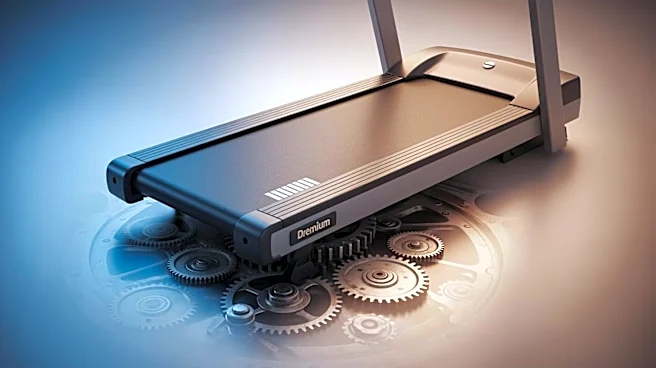
Today, treadmills are widely used for fitness and rehabilitation. They are equipped with electric motors and offer features like adjustable speed and incline settings. Medical treadmills are used for diagnostic purposes, delivering mechanical energy to the human body. Treadmills have become a staple in gyms, homes, and medical facilities, reflecting their evolution from ancient power sources to modern exercise equipment.