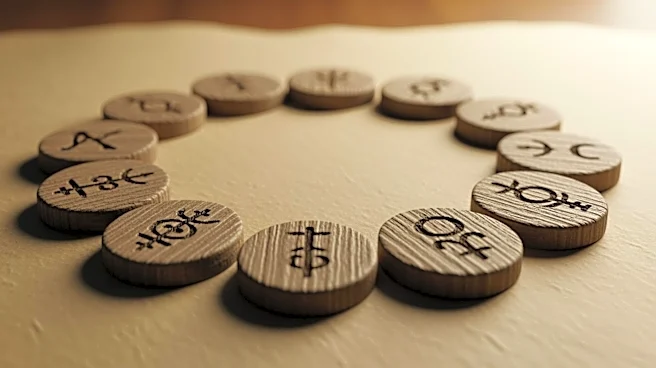







The Earthly Branches, also known as the Terrestrial Branches, are a fascinating system of twelve symbols deeply rooted in East Asian culture. Originating in China, these branches are not just a set of characters but a complex system that has influenced various aspects of life, including astrology, timekeeping, and cultural practices. This article delves into the symbolic and cultural significance of the Earthly Branches, highlighting their role in East Asian traditions.
The Twelve Symbols and Their Meanings
The Earthly Branches consist of twelve symbols, each associated with a specific animal and element. These symbols are Rat, Ox, Tiger, Rabbit, Dragon, Snake, Horse, Goat, Monkey, Rooster, Dog, and Pig. Each branch corresponds to an element from the Chinese philosophy of Wuxing, which includes Water, Earth, Wood, Fire, and Metal. Additionally, the branches are linked to the Yin-Yang duality, with each symbol representing either Yin or Yang.
The branches are not merely abstract symbols; they hold significant cultural meanings. For instance, the Rat, associated with Water and Yang, represents the hours from 23:00 to 01:00. Similarly, the Ox, linked to Earth and Yin, corresponds to the hours from 01:00 to 03:00. This intricate system of associations reflects the deep connection between the Earthly Branches and the natural world, as well as their role in structuring time and space in traditional East Asian societies.
Cultural Applications and Influence
The Earthly Branches have been used in various cultural applications, most notably in the sexagenary cycle, a dating system that combines the branches with the ten Heavenly Stems. This cycle has been a fundamental part of Chinese calendars and is still used in some traditional practices today. The branches also play a crucial role in Chinese astrology, where they are used to determine personality traits and predict future events based on one's birth year.
Beyond astrology, the Earthly Branches have influenced other cultural practices, such as Taoist rituals and traditional Chinese medicine. In Taoism, the branches are used to align rituals with cosmic cycles, ensuring harmony with the natural order. In traditional medicine, the branches help practitioners understand the body's rhythms and diagnose ailments based on the time of day and the corresponding branch.
Historical Development and Theories
The origins of the Earthly Branches are shrouded in mystery, with several theories attempting to explain their development. One theory suggests that the branches were adapted from observations of the planet Jupiter, whose orbit closely aligns with a twelve-year cycle. Another theory posits that the branches originally represented phases of the moon, later repurposed for calendrical use.
Archaeological evidence indicates that the Earthly Branches are at least as old as the Shang dynasty, with some suggesting they may be even older. Over time, as Chinese cosmology evolved, the branches were integrated into more sophisticated systems, such as the 60-cycle used for measuring time beyond days. This historical evolution underscores the enduring significance of the Earthly Branches in East Asian culture.