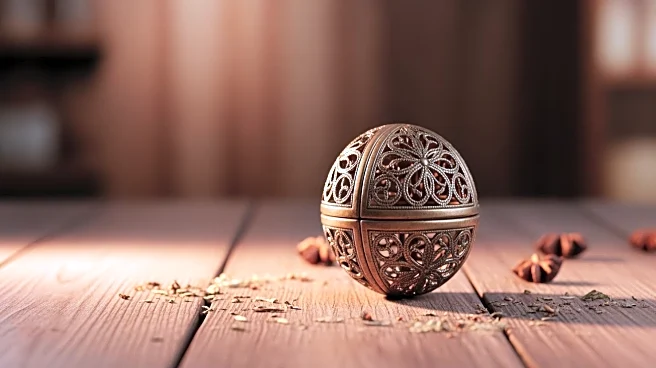




Pomanders, fragrant balls used for perfumes, have a rich history that dates back to the Middle Ages. These aromatic objects were not only a means to mask unpleasant odors but also served as a protective charm against disease. Crafted from precious materials like gold and silver, pomanders were a staple accessory for the aristocracy, evolving in design and function over the centuries.
Origins and Early Use
The term "pomander" originates from the French "pomme d'ambre," meaning
apple of amber. This name reflects the use of ambergris, a key ingredient in the perfumes contained within these spherical cases. Pomanders were first mentioned in literature in the mid-thirteenth century, highlighting their longstanding presence in European culture. During the late Middle Ages, they were commonly worn or carried as a safeguard against infection during times of pestilence.
These globular cases, often perforated with intricate designs, were suspended from neck chains or belts, allowing the wearer to carry multiple scents. The pomander's design included several partitions, each holding a different perfume, showcasing the sophistication of medieval craftsmanship.
Evolution Through the Renaissance
As the Renaissance unfolded, pomanders became more than just a practical item; they were a symbol of status and wealth. Recipes for making pomanders, such as those found in John Partridge's "The Treasury of Commodious Conceits," illustrate the elaborate process of creating these scented objects. Ingredients like benzoin resin, calamite, and storax balsam were combined with musk and civet to produce a rich, aromatic blend.
Royalty and nobility embraced pomanders as fashionable accessories. Notable figures like Mary I of England and Elizabeth I adorned themselves with pomander buttons and girdles, emphasizing their importance in courtly attire. The Duke of Buckingham even commissioned a gold pomander as a gift for Catherine of Aragon, underscoring its value as a luxurious item.
Decline and Modern Adaptations
By the 17th century, the use of pomanders began to wane as hygiene improved and new methods of scenting emerged. However, the concept of the pomander persisted, evolving into modern forms such as the orange studded with cloves. This 20th-century adaptation serves to perfume and freshen the air, continuing the pomander's legacy in a new form.
Today, pomanders are appreciated for their historical significance and their role in the development of personal fragrance. They offer a glimpse into the past, where scent was not only a luxury but a necessity for health and social standing. As we explore the history of pomanders, we uncover a fascinating journey of cultural and technological evolution.