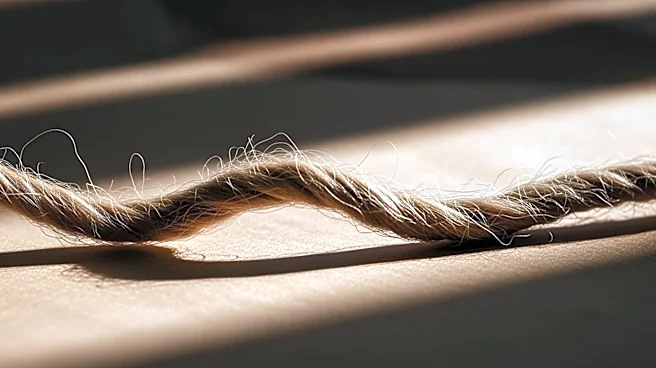







Ramie, a fiber crop native to eastern Asia, has a rich history that spans thousands of years. Derived from the plant Boehmeria nivea, ramie has been used in various cultures for its strength and unique properties. This article delves into the historical journey of ramie fiber, exploring its ancient uses and cultural significance across different regions.
Ancient Uses and Cultural Roots
Ramie is one of the oldest fiber crops, with a history of use dating back at least 6,000 years.
In ancient China, ramie was used to weave clothing, and it is known as zhu ma in Chinese. The fiber's resistance to bacteria and mildew made it suitable for mummy wrappings in Egypt, although distinguishing ramie from flax in ancient cloth can be challenging.
In Taiwan, the aboriginal people have utilized ramie for millennia in fabric production. The fiber remains an integral part of traditional garb, crafted by artisans like Yuma Taru. These historical uses highlight ramie's enduring presence in cultural practices and its importance in traditional textile production.
Ramie in Modern History
In the early 20th century, ramie gained attention in the fashion industry. The French painter Raoul Dufy designed patterns for prints on mechera, an open-weave fabric made from ramie, used by the French shirtmaker Charvet. This period marked a significant moment in ramie's history, as it became associated with high-quality fashion and design.
Brazil began producing ramie in the late 1930s, with production peaking in 1971. However, competition from alternative crops like soybeans and synthetic fibers led to a decline in ramie production. Despite these challenges, ramie's historical significance and unique properties continue to make it a valuable fiber in various applications.
Cultural Significance and Traditions
Ramie's cultural significance extends beyond its historical uses. In Japan, ramie is used to produce high-quality summer kimonos, known as choma or bu. Textiles like Yaeyama Jofu and Miyako Jofu are highly prized for their craftsmanship and quality, reflecting ramie's importance in Japanese culture.
In Vietnam, ramie leaves are a key ingredient in making bánh gai, a traditional glutinous rice cake. The leaves impart a distinct color, flavor, and fragrance to the cake, showcasing ramie's role in Vietnamese cuisine. These cultural traditions underscore ramie's enduring significance and its integration into the cultural fabric of various societies.
The historical journey of ramie fiber reveals its deep-rooted significance across cultures and time. From ancient textile production to modern fashion and cultural traditions, ramie continues to be a fiber of historical and cultural importance.