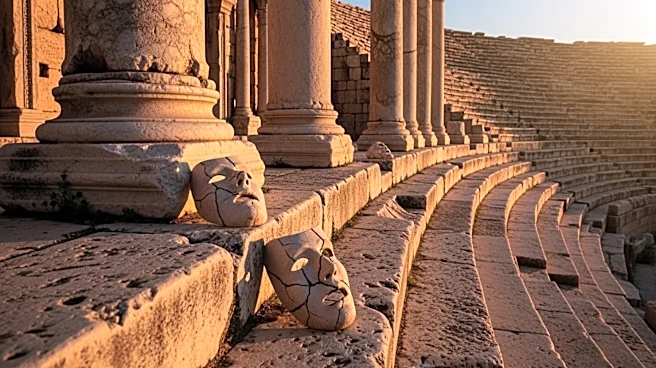








Tragedy, as a dramatic genre, has a rich history that traces back to ancient Greece. It is a form of drama that explores human suffering and often aims to invoke catharsis in its audience. Greek tragedy, in particular, emerged in Athens during the 5th century BCE and has since played a significant role in shaping Western literature and drama. This article delves into the historical development of Greek tragedy, highlighting its origins, key playwrights,
and its evolution over time.
Origins of Greek Tragedy
The roots of Greek tragedy can be traced back to the ancient rites performed in honor of Dionysus, the god of wine and fertility. These rites involved choral songs known as dithyrambs, which were sung and danced by a chorus. According to Aristotle, tragedy evolved from these dithyrambs, gradually incorporating spoken dialogue and dramatic elements. The term "tragedy" itself is believed to derive from the Greek words for "goat" and "song," possibly referring to the chorus of satyrs or the prize of a goat awarded in early competitions.
The first known tragedian was Thespis, who is credited with introducing the concept of an actor who interacts with the chorus, thus creating a new form of performance. This innovation marked the beginning of tragedy as a distinct genre, setting the stage for future developments in Greek drama.
The Golden Age of Greek Tragedy
The 5th century BCE is often regarded as the golden age of Greek tragedy, with Athens as its cultural center. During this period, three playwrights—Aeschylus, Sophocles, and Euripides—dominated the theatrical scene. Aeschylus is known for introducing the second actor, allowing for more complex interactions and conflicts. His works often focused on themes of divine justice and human morality.
Sophocles further developed the genre by adding a third actor and placing greater emphasis on character development and psychological depth. His tragedies, such as "Oedipus Rex," are renowned for their exploration of fate and human suffering. Euripides, the youngest of the three, introduced a more realistic portrayal of characters and emotions, often challenging traditional values and societal norms.
The Legacy of Greek Tragedy
Greek tragedy continued to influence drama long after its classical period. The themes and structures established by Aeschylus, Sophocles, and Euripides laid the groundwork for Roman tragedy and later European drama. The genre's focus on human suffering, moral dilemmas, and the interplay between fate and free will resonated with audiences across different cultures and eras.
In modern times, Greek tragedy remains a subject of study and adaptation, with its timeless themes still relevant today. The works of the great tragedians continue to be performed and reinterpreted, demonstrating the enduring legacy of this ancient art form. As a testament to its impact, Greek tragedy has become a cornerstone of Western literature, influencing countless playwrights, philosophers, and artists throughout history.