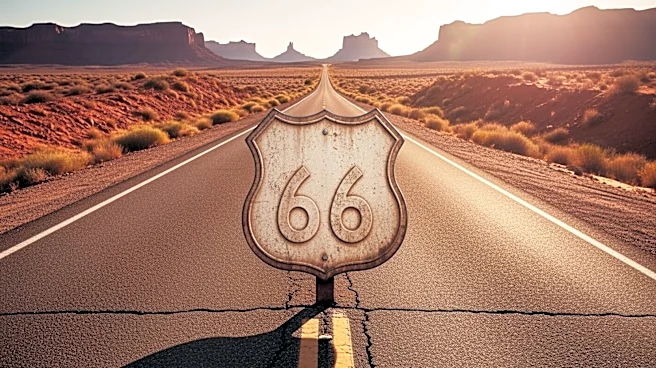







U.S. Route 66, often referred to as the Mother Road, is a symbol of American history and culture. Established in 1926, this highway stretched from Chicago, Illinois, to Santa Monica, California, covering 2,448 miles. It played a crucial role in the westward migration during the Dust Bowl of the 1930s and contributed significantly to the economic development of the communities it connected. Although officially decommissioned in 1985, Route 66 remains
a cherished part of American heritage, with many segments preserved as Historic Route 66.
The Birth and Rise of Route 66
Route 66 was born out of a need for a national highway system. Before its establishment, long-distance travel relied on a network of privately marked auto trails. The route that became Route 66 incorporated segments of several trails, including the National Old Trails Road and parts of the Ozark Trails system. The highway was officially designated in 1926, connecting Chicago to Los Angeles, and was fully paved by 1938, making it the first U.S. highway to achieve this milestone.
The highway's creation was driven by the Federal Aid Road Act of 1916 and the Federal Aid Highway Act of 1921, which expanded federal involvement in highway development. Businessman Cyrus Avery played a pivotal role in advocating for the Chicago-Los Angeles route, which became Route 66. The highway quickly gained popularity, becoming a major route for westward migration, especially during the Dust Bowl era.
Decline and Decommissioning
The decline of Route 66 began with the Federal-Aid Highway Act of 1956, which authorized the construction of the Interstate Highway System. These new highways provided faster, more direct routes, gradually replacing older highways like Route 66. By the late 1970s, most sections of Route 66 had been bypassed by interstates, leading to its official removal from the United States Highway System in 1985.
Despite its decommissioning, many segments of Route 66 have been preserved as Historic Route 66, a National Scenic Byway. These efforts have helped maintain the highway's legacy and continue to attract tourists from around the world.
Cultural Impact and Legacy
Route 66 has left an indelible mark on American culture. It has been immortalized in literature, music, and film, often symbolizing freedom and adventure. John Steinbeck's novel "The Grapes of Wrath" popularized the term "Mother Road," and Bobby Troup's song "(Get Your Kicks on) Route 66" became an anthem for travelers.
Today, Route 66 is celebrated for its historical significance and cultural impact. Preservation efforts by local and national organizations have ensured that this iconic highway remains a vital part of America's transportation history. As a symbol of the American spirit, Route 66 continues to inspire generations of travelers and adventurers.