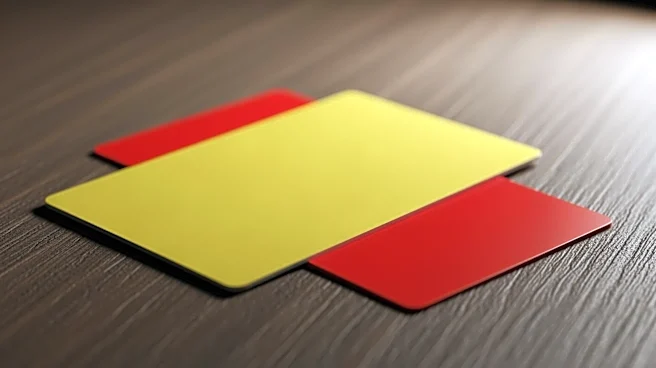

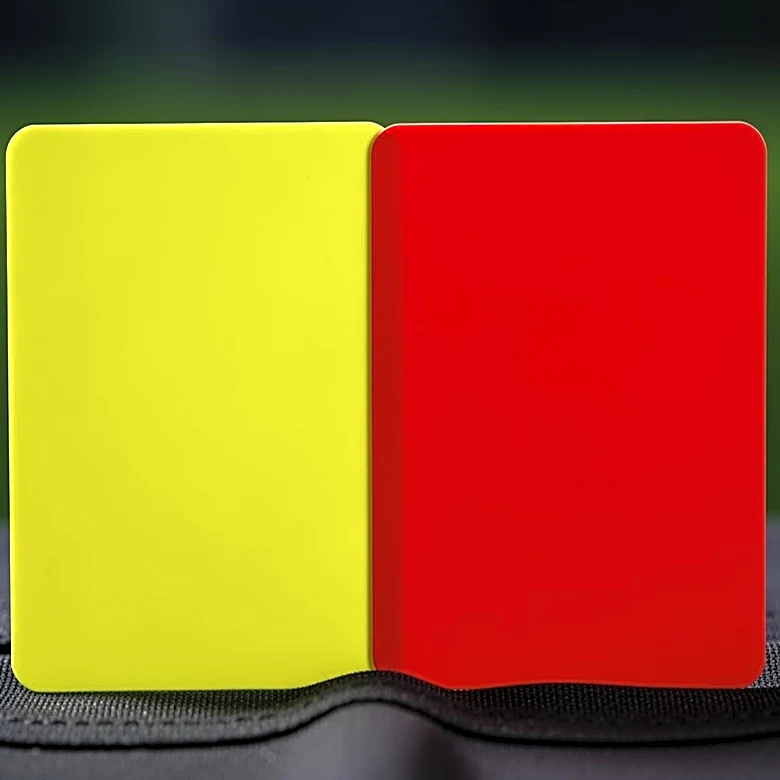





Penalty cards have become a staple in many sports, serving as a crucial tool for referees to manage player conduct. The evolution of penalty cards reflects the growing need for a standardized method to address infractions across various sports. This article explores the historical development of penalty cards and their adoption in different sporting disciplines.
The Birth of Penalty Cards in Football
The concept of penalty cards was first introduced in association football, with the aim
of providing a clear and universal method for referees to communicate their decisions. The idea was pioneered by English referee Ken Aston, who was inspired by the color-coding system of traffic lights. This innovation was first implemented during the 1970 FIFA World Cup in Mexico, where yellow cards were used to indicate a caution and red cards signified a player's ejection from the game.
The introduction of penalty cards in football was a significant milestone, as it provided a language-neutral way to communicate with players and spectators. This system quickly gained acceptance and became an integral part of the sport, setting a precedent for other sports to follow.
Adoption of Penalty Cards in Other Sports
Following their success in football, penalty cards were adopted by various other sports, each adapting the system to fit their specific rules and requirements. In rugby, for example, yellow cards result in a temporary suspension, known as a "sin bin," where the player must leave the field for a set period. This adaptation allows the sport to maintain its fast-paced nature while addressing infractions effectively.
In field hockey, yellow cards also indicate temporary suspensions, but the duration can vary based on the severity of the offense. Sports like badminton and fencing use yellow cards as warnings, with subsequent infractions leading to more severe penalties, such as point deductions or disqualification. This flexibility in application demonstrates the versatility of the penalty card system.
The Impact of Penalty Cards on Sports
The introduction and evolution of penalty cards have had a profound impact on sports, providing a structured way to handle infractions and maintain the integrity of the game. By offering a clear and consistent method for addressing misconduct, penalty cards help ensure that players adhere to the rules and promote fair play.
Moreover, the use of penalty cards adds a strategic element to sports, as teams must adapt to playing with fewer players when a card is issued. This can significantly alter the dynamics of a game, requiring teams to adjust their tactics and strategies accordingly.
In conclusion, the evolution of penalty cards in sports highlights their importance in promoting fair play and maintaining the integrity of the game. As sports continue to evolve, the use of penalty cards will likely remain a key component in ensuring that games are played in the spirit of competition and respect.