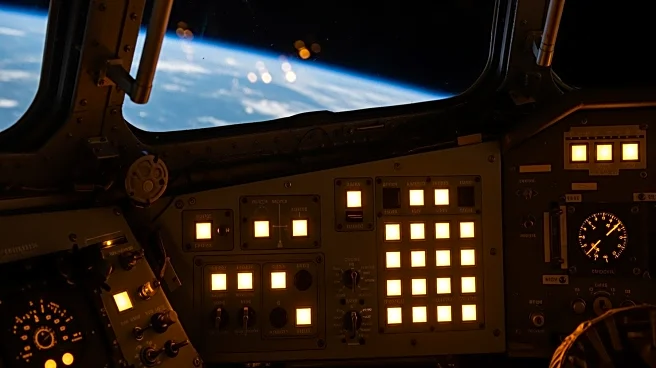



Gemini 8 marked a significant milestone in NASA's space exploration history. Launched on March 16, 1966, it was the sixth crewed mission in the Gemini program and the first to achieve the docking of two spacecraft in orbit. However, the mission also faced a critical in-space system failure, which tested the skills and resilience of astronauts Neil Armstrong and David Scott. This article delves into the mission's objectives, challenges, and its lasting
impact on space exploration.
The Objectives of Gemini 8
The Gemini 8 mission was designed to be a three-day operation with several ambitious objectives. One of the primary goals was to perform the first docking in space with an Agena target vehicle, which had been launched into a circular orbit prior to Gemini 8's launch. This docking was a crucial step in developing the techniques necessary for future lunar missions, as it demonstrated the ability to connect two spacecraft in orbit.
In addition to the docking, the mission included plans for an extra-vehicular activity (EVA) by astronaut David Scott. This EVA was intended to last over two hours and involved retrieving experiments and testing tools outside the spacecraft. The mission also carried several scientific, technological, and medical experiments to further understand the conditions of space travel.
The Critical Failure and Emergency Response
Shortly after the successful docking with the Agena vehicle, Gemini 8 encountered a serious problem. The spacecraft began to roll uncontrollably, a situation that was initially suspected to be caused by the Agena's attitude control system. However, it was soon determined that the issue was with Gemini 8 itself. The astronauts, out of communication range with ground control, had to rely on their training and instincts to address the situation.
Neil Armstrong, the command pilot, used the spacecraft's thrusters to stabilize the roll, but the problem persisted. Realizing that the issue was with their own spacecraft, Armstrong and Scott decided to undock from the Agena. The situation worsened as the spacecraft's rotation increased, reaching a dangerous rate. Armstrong then switched to the Reentry Control System to regain control, successfully stabilizing the spacecraft.
The Aftermath and Legacy of Gemini 8
The emergency forced an immediate abort of the mission, and Gemini 8 made an emergency landing in the Pacific Ocean. Despite the challenges, the mission was considered a success in terms of the lessons learned and the experience gained by the astronauts. The incident led to changes in spacecraft design and procedures, including the isolation of thruster circuits to prevent similar malfunctions in the future.
Gemini 8's mission highlighted the importance of astronaut training and quick decision-making in space. It also underscored the need for robust systems and procedures to handle unexpected situations. The mission's success in docking and the handling of its critical failure provided valuable insights that contributed to the success of subsequent Apollo missions, ultimately paving the way for the historic lunar landings.