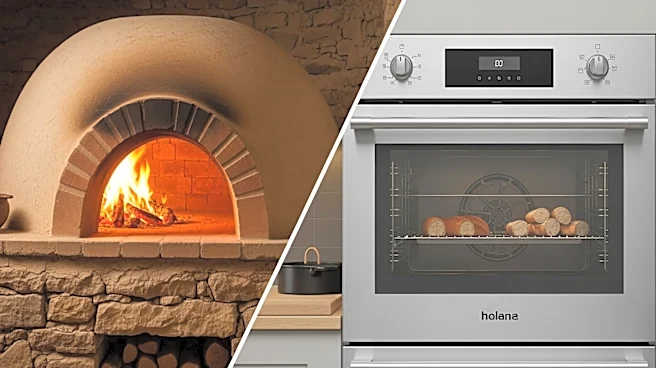






Ovens have been a crucial part of human civilization, evolving from simple pits in the ground to sophisticated kitchen appliances. This journey through time highlights the significant milestones in the development of ovens, showcasing their transformation from ancient cooking methods to modern conveniences. Understanding this evolution provides insight into how ovens have shaped culinary practices and industrial processes over the centuries.
Ancient Beginnings
The earliest
ovens date back to 29,000 BC in Central Europe, where they were used as roasting and boiling pits inside yurts. These primitive ovens were essential for cooking mammoth meat, demonstrating the early human need for controlled heating. By 20,000 BC, in Ukraine, pits with hot coals covered in ashes were used, with food wrapped in leaves and covered with earth to cook. This method of cooking was not only practical but also laid the foundation for more advanced oven designs.
As civilizations developed, so did their cooking methods. By 6600 BC, clay ovens appeared in homes in Çatalhöyük, and by 4000 BC, clay ovens were in use throughout Mesopotamia. These early ovens were crucial for baking bread and making pottery, indicating their dual role in both culinary and industrial applications. The evolution of ovens continued with the introduction of tandır ovens in Anatolia during the Seljuk and Ottoman eras, which were used to bake unleavened flatbread.
Middle Ages to Industrial Revolution
During the Middle Ages, Europeans transitioned from earth and ceramic ovens to using fireplaces with large cauldrons, similar to the Dutch oven. This period saw significant advancements in oven design, with the introduction of wood-burning stoves that improved smoke containment. The cast-iron stove emerged in the early 1700s, offering a more efficient cooking method with its own chimney.
The 19th century marked the advent of coal and gas ovens. The coal oven, made of heavy cast iron, was cylindrical and became a staple in many households. Gas ovens gained popularity as gas lines became more widespread, with James Sharp patenting one of the first gas stoves in 1826. These innovations paved the way for the modern kitchen, making cooking more accessible and efficient.
Modern Innovations
The late 19th and early 20th centuries saw the introduction of electric ovens, although widespread use was limited until electricity became more efficient. The microwave oven, discovered by Percy Spencer in 1946, revolutionized cooking by using microwave radiation to heat food quickly. This innovation marked a significant shift in how people prepared meals, offering convenience and speed.
Today, ovens are an integral part of kitchens worldwide, available in various forms such as convection, microwave, and combination ovens. These modern appliances continue to evolve, incorporating advanced technologies to enhance cooking efficiency and versatility. The journey of ovens from ancient pits to high-tech kitchen appliances reflects the ongoing quest for better cooking solutions, shaping culinary practices across cultures and eras.