



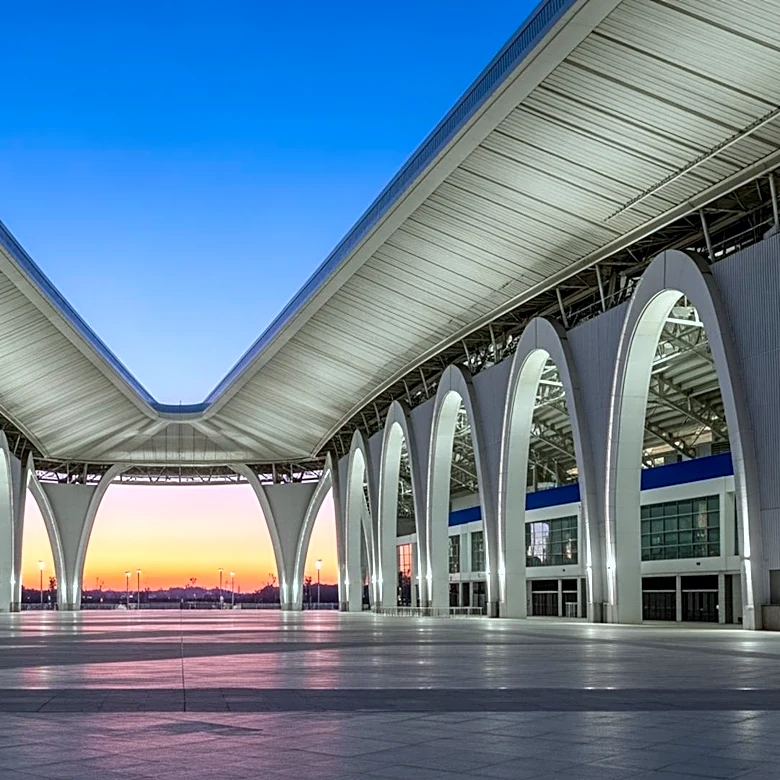



Jeju World Cup Stadium, located in Seogwipo, South Korea, played a significant role during the 2002 FIFA World Cup. Built specifically for the tournament, the stadium hosted several key matches and has since become a lasting symbol of the event's impact on the region. This article explores the stadium's involvement in the World Cup and its enduring legacy.
Hosting the World Cup
Jeju World Cup Stadium was one of the venues selected to host matches during the 2002 FIFA World Cup,
a tournament co-hosted by South Korea and Japan. The stadium was constructed with a capacity of 42,000 to accommodate the influx of international fans and players. Its design, inspired by the island's volcanic and maritime heritage, provided a unique setting for the matches.
During the World Cup, Jeju World Cup Stadium hosted three matches. One of the most notable was the match between Brazil and China on June 8, 2002, where Brazil secured a decisive 4-0 victory. This match was part of Group C, which also included Turkey and Costa Rica. The stadium's role in hosting these matches contributed to the global exposure of Jeju Island and its cultural significance.
Impact on Jeju Island
The 2002 FIFA World Cup had a profound impact on Jeju Island, with the stadium serving as a focal point for international attention. The event brought an influx of tourists and media, boosting the local economy and increasing the island's visibility on the world stage. The successful hosting of World Cup matches demonstrated Jeju's capability to accommodate large-scale international events.
In the years following the World Cup, Jeju World Cup Stadium has continued to serve as a venue for sports and entertainment. It became the home of Jeju SK, a K League club, in 2006, further cementing its status as a key sports facility in the region. The stadium's continued use ensures that the legacy of the 2002 FIFA World Cup lives on in Jeju.
A Lasting Legacy
The legacy of Jeju World Cup Stadium extends beyond its role in the 2002 FIFA World Cup. The stadium has become a symbol of Jeju Island's cultural and sporting achievements. Its unique design and historical significance attract visitors from around the world, contributing to the island's tourism industry.
Today, Jeju World Cup Stadium stands as a testament to the lasting impact of the 2002 FIFA World Cup on South Korea and Jeju Island. It remains a vibrant hub for sports and cultural events, continuing to play a vital role in the community and preserving the memory of a historic tournament.