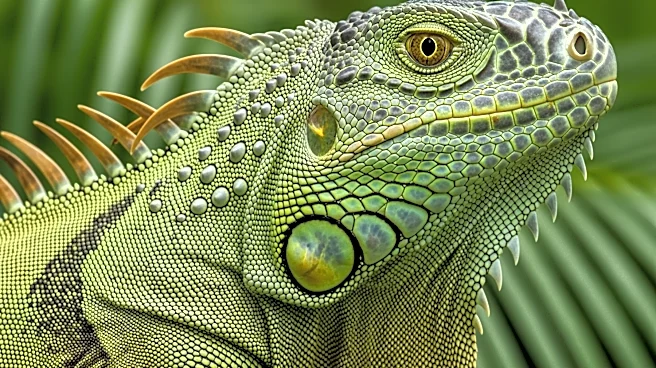








Iguanas are a genus of herbivorous lizards known for their distinctive physical features and remarkable adaptations. These reptiles are native to tropical regions and have evolved various traits that enable them to thrive in diverse environments. This article explores the anatomy and adaptations of iguanas, highlighting how these features contribute to their survival and ecological roles.
Physical Characteristics of Iguanas
Iguanas are large lizards, with some species reaching lengths
of up to 6.5 feet, including their tails. They possess a dewlap, a flap of skin under the chin, and a row of elongated scales running from the midline of their necks down to their tails. These scales vary in size and texture, providing protection and aiding in thermoregulation.
One of the most notable features of iguanas is their keen vision. They can see shapes, shadows, colors, and movement at long distances, which helps them navigate through dense forests and locate food. Their visual acuity also plays a role in communication, as iguanas use visual signals to interact with other members of their species.
Adaptations for Survival
Iguanas have developed several adaptations that enhance their survival in the wild. Their coloration allows them to blend into their surroundings, providing camouflage from predators. This ability to remain inconspicuous is crucial for avoiding detection by larger animals.
Another adaptation is the iguana's three-chambered heart, which supports their active lifestyle. The heart consists of two atria and one ventricle, facilitating efficient circulation. Additionally, iguanas have a high density of fast-twitch muscle fibers, enabling them to move quickly for short bursts, which is essential for escaping threats.
The Parietal Eye and Skull Morphology
Iguanas possess a unique feature known as the parietal eye, a pale scale on the top of their heads that is sensitive to changes in light. This organ helps regulate their circadian rhythms by signaling the pineal gland about day and night cycles. The presence of a photopigment sensitive to ultraviolet light further aids in this process.
The skull morphology of iguanas is adapted for their herbivorous diet. They have strong jaws and serrated teeth designed to grasp and shear plant material. The acrodontal placement of their teeth, sitting on top of the jawbone, allows for efficient processing of vegetation. These adaptations enable iguanas to thrive on a diet primarily composed of leaves and foliage.
Iguanas are remarkable reptiles with a range of physical characteristics and adaptations that support their survival in various environments. Their keen vision, camouflage abilities, and specialized anatomy make them well-suited to their ecological roles. Understanding these features provides insight into the evolutionary success of iguanas and their importance in the ecosystems they inhabit.