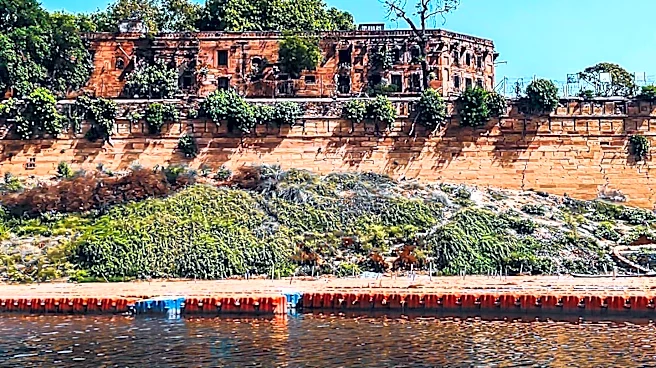




Fort Hamilton, located on Rose Island in Narragansett Bay, Rhode Island, is a fascinating piece of American history. Constructed between 1798 and 1801, it was part of the first federal coastal defense initiative authorized by President John Adams. Although never fully completed, Fort Hamilton remains one of the last surviving First System forts in the United States. This article delves into the historical significance of Fort Hamilton, its role during
the American Revolutionary War, and its later uses.
Early Military Importance
During the American Revolutionary War, the strategic location of Rose Island made it a focal point for military activity. From 1776 to 1779, British forces occupied Newport, Rhode Island, and fortified Rose Island with a battery to control maritime access to the harbor. This move was crucial in maintaining British control over the region. However, in 1780, after the British evacuated Newport, French forces under General Lafayette took over and improved the island's defenses. They constructed a fortification with 40 pieces of heavy artillery, which became an integral part of the defensive network protecting Newport.
The fort's construction as part of the First System of U.S. coastal fortifications began in 1798, in response to growing tensions with France during the Quasi-War. President John Adams authorized the purchase of Rose Island for military use, and the fort was designed by French military engineer Louis Tousard. The plan included four bastions designed for sixty cannons and bombproof barracks, among the first of their kind in the United States.
Construction and Design
Fort Hamilton was intended to be the largest defensive structure in Narragansett Bay. Its design featured circular bastions, an unusual element in early U.S. fortifications. However, the construction was halted in 1801 when President Thomas Jefferson reduced federal military spending, leading to the cancellation of the fort's completion. Despite this, Fort Hamilton remains a rare example of an intact First System fort, retaining its original bombproof barracks, bastions, and curtain walls.
Although the fort never became operational, it played a significant role in the history of U.S. military architecture. The site was later used as an ammunition depot during World War I and World War II, with the bombproof barracks repurposed as storage facilities. The U.S. government maintained control of the site for nearly two centuries, highlighting its continued strategic importance.
Preservation and Legacy
Today, Fort Hamilton is undergoing preservation efforts led by the Rose Island Lighthouse and Fort Hamilton Trust. It is open to the public for historical interpretation and educational programs, allowing visitors to explore its rich history. The fort is part of the Fort Hamilton Historic District, listed on the National Register of Historic Places since 2001. Preservation efforts include masonry restoration, erosion control measures, and plans to establish a permanent museum in the bombproof barracks.
Fort Hamilton's connection to HMS Endeavour, the famed ship used by Captain James Cook, further enhances its historical significance. During the Revolutionary War, the British scuttled the ship off the northeast coast of Rose Island to block French naval access. This link adds another layer to the fort's maritime and military history, making it a valuable site for historical study and preservation.