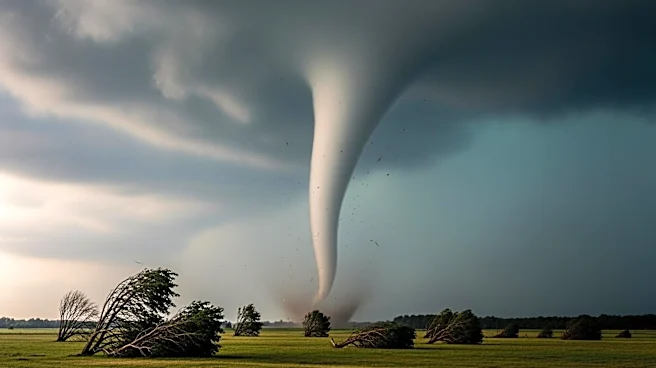







In April 2011, the United States experienced the largest tornado outbreak in its history, known as the 2011 Super Outbreak. This catastrophic event saw the formation of 362 tornadoes over several days, causing widespread devastation across multiple states. The outbreak was particularly severe in Alabama, Mississippi, and Tennessee, where the most powerful tornadoes struck, leading to significant loss of life and property.
The Scale of the Outbreak
The 2011 Super Outbreak was
unprecedented in its scale, with 362 tornadoes touching down over a short period. Among these, four were classified as EF5 tornadoes, the most severe category, capable of causing incredible destruction. Additionally, there were 12 EF4 tornadoes and 21 EF3 tornadoes, each contributing to the widespread damage. The sheer number of tornadoes and their intensity made this outbreak the largest recorded in U.S. history.
The outbreak began on April 25, with supercells forming across Arkansas, Northeast Texas, and Southeast Oklahoma. These supercells merged into a massive squall line of severe thunderstorms, which produced numerous tornadoes. As the system moved eastward, it continued to spawn tornadoes across several states, with the most significant activity occurring on April 27.
Impact on Affected States
Alabama, Mississippi, and Tennessee were among the hardest-hit states during the outbreak. On April 27, the supercells moved into these states, producing the most intense tornadoes of the event. Alabama, in particular, experienced four EF5 tornadoes, which caused catastrophic damage in several communities. The squall line of severe thunderstorms also moved into Kentucky, North Carolina, and South Carolina, further expanding the area affected by the outbreak.
The impact on these states was devastating, with entire communities being leveled by the powerful tornadoes. The outbreak resulted in 321 fatalities, making it one of the deadliest tornado events in U.S. history. The combination of the number of tornadoes, their intensity, and the widespread area affected contributed to the significant loss of life and property.
The Aftermath and Legacy
In the aftermath of the 2011 Super Outbreak, affected communities faced the daunting task of rebuilding. The scale of the destruction required extensive recovery efforts, with federal and state agencies working together to provide aid and support to those impacted. The event also prompted a reevaluation of tornado preparedness and response strategies, as communities sought to improve their resilience against future outbreaks.
The 2011 Super Outbreak remains a significant event in meteorological history, serving as a stark reminder of the power and unpredictability of nature. It highlighted the importance of early warning systems and community preparedness in mitigating the impact of such devastating natural disasters.