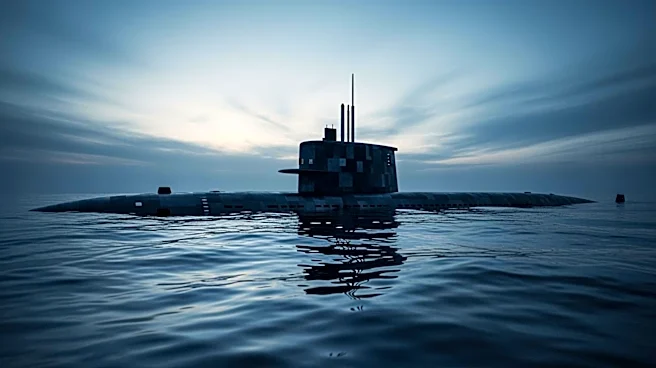





German submarine U-110, a Type IXB U-boat, played a notable role in the early years of World War II. Commissioned in November 1940, U-110 was part of Nazi Germany's Kriegsmarine and was commanded by Kapitänleutnant Fritz-Julius Lemp. This article explores the operational history of U-110, highlighting its missions and engagements during its brief but impactful service.
Early Missions and First Patrol
U-110's keel was laid down in February 1940, and the submarine was launched in August
of the same year. By November 1940, it was commissioned and assigned to the 2nd U-boat Flotilla. Under the command of Fritz-Julius Lemp, U-110 embarked on its first patrol in March 1941, departing from Kiel.
The submarine's route to the Atlantic Ocean took it through the gap between the Faroe and Shetland Islands. During this patrol, U-110 damaged the ship Erodona south of Iceland on March 16. A week later, it attacked Siremalm, which managed to escape despite being hit by a torpedo that failed to detonate. The patrol was cut short due to damage from an exploding deck gun, and U-110 returned to Lorient, France, on March 29.
Second Patrol and Notable Engagements
U-110's second patrol began on April 15, 1941, when it departed from Lorient. The submarine's mission was to target Allied shipping in the North Atlantic. On April 27, U-110 successfully sank the ship Henri Mory, located approximately 330 nautical miles west-northwest of the Blasket Islands in Ireland.
The submarine's next target was convoy OB 318, east of Cape Farewell, Greenland. U-110 managed to sink two ships, Esmond and Bengore Head, before being detected by the British corvette HMS Aubrietia. The subsequent attack by British destroyers forced U-110 to surface, leading to its capture by the Royal Navy on May 9, 1941.
The Legacy of U-110's Capture
The capture of U-110 was a significant event in the Battle of the Atlantic. The Royal Navy's boarding party, led by Sub-Lieutenant David Balme, seized crucial cipher documents and an Enigma machine from the submarine. This intelligence was instrumental in aiding the Allies' codebreaking efforts at Bletchley Park, allowing them to intercept and decipher German communications.
U-110's capture, codenamed "Operation Primrose," remained a closely guarded secret for several months. The intelligence gained from the submarine played a vital role in reducing the effectiveness of German U-boat operations, ultimately contributing to the Allied victory in the Atlantic.
U-110's operational history, though brief, left a lasting impact on the course of World War II. Its missions and eventual capture underscore the strategic importance of intelligence and the bravery of those involved in its acquisition.