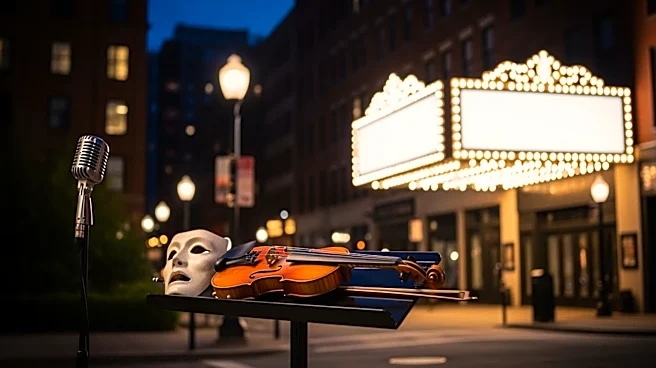







Kurt Weill's Street Scene stands as a remarkable example of the fusion between traditional European opera and American musical theater. Premiered in 1947, the opera was based on Elmer Rice's 1929 play and featured a libretto by Rice and Langston Hughes. Weill's vision was to create an "American opera" that would bridge the gap between these two distinct art forms, resulting in a work that is both groundbreaking and timeless.
Musical Elements
Street Scene's score is
a testament to Weill's ability to blend diverse musical styles. The opera features operatic arias and ensembles reminiscent of Giacomo Puccini, such as Anna Maurrant's "Somehow I Never Could Believe" and Frank Maurrant's "Let Things Be Like They Always Was." These pieces showcase the emotional depth and complexity typical of traditional opera.
In contrast, the opera also incorporates jazz and blues influences, evident in songs like "I Got a Marble and a Star" and "Lonely House." These elements reflect Weill's exposure to American musical idioms, which he studied extensively after fleeing Nazi Germany. The inclusion of Broadway-style musical numbers, such as "Wrapped in a Ribbon and Tied in a Bow" and "Moon-faced, Starry-eyed," further highlights the opera's unique blend of styles.
Dramatic Structure
Weill's approach to integrating drama and music is evident in the opera's structure. Street Scene unfolds over two brutally hot days on the doorstep of a Manhattan tenement, focusing on the romance between Rose Maurrant and Sam Kaplan, and the extramarital affair of Rose's mother, Anna. The opera portrays the ordinary lives of the tenement's residents, capturing their romances, squabbles, and gossip.
The use of dialogue scenes, sometimes underscored by music, enhances the realism of the work. Weill's collaboration with Langston Hughes aimed to elevate everyday language into simple, unsophisticated poetry, adding depth to the characters' interactions. This integration of spoken word, song, and movement creates a cohesive theatrical experience that resonates with audiences.
Cultural Impact
Street Scene's fusion of opera and musical theater has had a lasting impact on both art forms. By bridging the gap between European opera and American musical theater, Weill paved the way for future works that would explore similar themes and styles. The opera's success demonstrated the potential for cross-cultural collaboration and innovation, inspiring composers and librettists to experiment with new forms of expression.
As Street Scene continues to be performed worldwide, its unique blend of musical and dramatic elements serves as a testament to Kurt Weill's visionary approach to creating an "American opera." The work remains a powerful example of the transformative potential of art, transcending cultural boundaries and enriching the global artistic landscape.