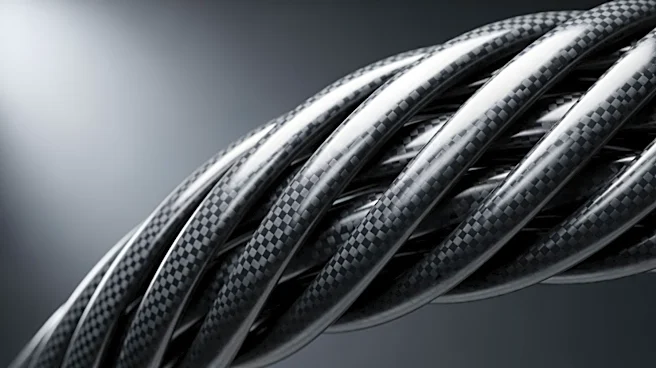






Carbon fiber, known for its high strength-to-weight ratio and versatility, has a fascinating history that spans over a century. Initially developed for use in light bulbs, carbon fiber has evolved into a critical material in industries such as aerospace, automotive, and sports equipment. This article explores the historical milestones that have shaped the development and application of carbon fiber.
Early Beginnings
The journey of carbon fiber began in the 19th century.
In 1860, Joseph Swan produced carbon fibers for the first time, using them in light bulbs. This early use of carbon fiber was further advanced by Thomas Edison in 1879, who carbonized cotton threads and bamboo slivers to create filaments for incandescent light bulbs. These early experiments laid the groundwork for the development of carbon fiber as a material with unique properties.
The early 20th century saw further advancements in carbon fiber technology. In 1958, Roger Bacon created high-performance carbon fibers at the Union Carbide Parma Technical Center. These fibers were manufactured by heating strands of rayon until they carbonized, although the process was inefficient, resulting in fibers with only about 20% carbon content. This marked the beginning of a new era in carbon fiber development.
Advancements in the 1960s
The 1960s were a pivotal decade for carbon fiber. Dr. Akio Shindo in Japan developed a process using polyacrylonitrile (PAN) as a raw material, producing carbon fibers with about 55% carbon content. This process significantly improved the strength and quality of carbon fibers, making them suitable for high-performance applications.
In 1963, a process developed by W. Watt, L. N. Phillips, and W. Johnson at the Royal Aircraft Establishment in the UK realized the high potential strength of carbon fiber. This process was patented and licensed to companies like Rolls-Royce, which used carbon fiber in jet engines. Despite initial setbacks, such as vulnerability to bird strikes, these developments paved the way for carbon fiber's use in aerospace.
Modern Applications
Today, carbon fiber is a staple in various industries. The late 1960s and 1970s saw Japanese companies like Toray and Mitsubishi leading the way in manufacturing PAN-based carbon fibers. These fibers found applications in military and civil aircraft, including planes from Boeing and Airbus.
Carbon fiber's high strength-to-weight ratio makes it ideal for aerospace, automotive, and sports equipment. It is used in aircraft and spacecraft parts, racing car bodies, and even golf club shafts. The material's evolution from light bulb filaments to high-tech applications highlights its versatility and importance in modern engineering.
The history of carbon fiber is a testament to human ingenuity and the relentless pursuit of innovation. From its humble beginnings to its current status as a critical material in advanced technologies, carbon fiber continues to shape the future of various industries.