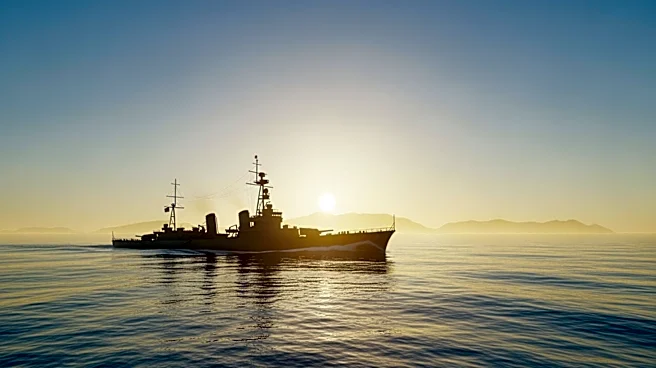







The Battle of Manila Bay, fought on May 1, 1898, was a pivotal moment in the Spanish-American War. This naval engagement saw the American Asiatic Squadron, led by Commodore George Dewey, decisively defeat the Spanish Pacific Squadron under Contraalmirante Patricio Montojo. The battle not only marked a significant victory for the United States but also signaled the end of Spanish colonial rule in the Philippines. This article delves into the strategic
and tactical elements that contributed to the American victory.
The Prelude to Battle
Tensions between Spain and the United States had been escalating due to Spain's actions during the Cuban War of Independence. The explosion of the USS Maine in Havana harbor further inflamed American sentiment, leading to the declaration of war on April 25, 1898. Anticipating conflict, the U.S. Asiatic Squadron was ordered to Hong Kong as a precaution against the Spanish fleet in the Philippines.
Commodore Dewey, a seasoned veteran of the American Civil War, was tasked with engaging the Spanish fleet. The American squadron, equipped with superior naval gunnery and seamanship, was poised for action. Dewey's strategic decision to enter Manila Bay at night, avoiding mined channels, set the stage for a surprise attack on the Spanish forces.
The Battle Unfolds
On the morning of May 1, Dewey's squadron entered Manila Bay and engaged the Spanish fleet. The Spanish, aware of their disadvantage, mounted a desperate defense. Despite their efforts, the battle was one-sided, with the American forces sinking the entire Spanish fleet. Dewey's command to "fire when ready" initiated a devastating barrage that overwhelmed the Spanish ships.
Montojo, realizing the hopelessness of the situation, ordered his cruisers to be scuttled to prevent capture. The Spanish fleet, composed mostly of older cruisers and gunboats, was no match for the modern American ships. The battle concluded with minimal American casualties, highlighting the effectiveness of Dewey's strategy and the superiority of American naval power.
Aftermath and Significance
The victory at Manila Bay had far-reaching implications. It marked the end of Spanish colonial rule in the Philippines and established the United States as a formidable naval power. Dewey's triumph was celebrated back home, earning him a special medal and the rank of Admiral of the Navy.
The battle also prompted the U.S. to send additional troops to seize Manila, further solidifying American control in the region. Dewey's leadership and the strategic execution of the battle remain significant in the annals of naval warfare, showcasing the impact of superior tactics and technology in achieving decisive victories.